TL;DR: what is DRM?
DRM (digital rights management) is a set of technologies that controls what people can do with digital content after they receive it. It encrypts the file, ties decryption to a licence or policy, and enforces rules such as who can open, edit, print, copy or share it, for how long and on which devices.
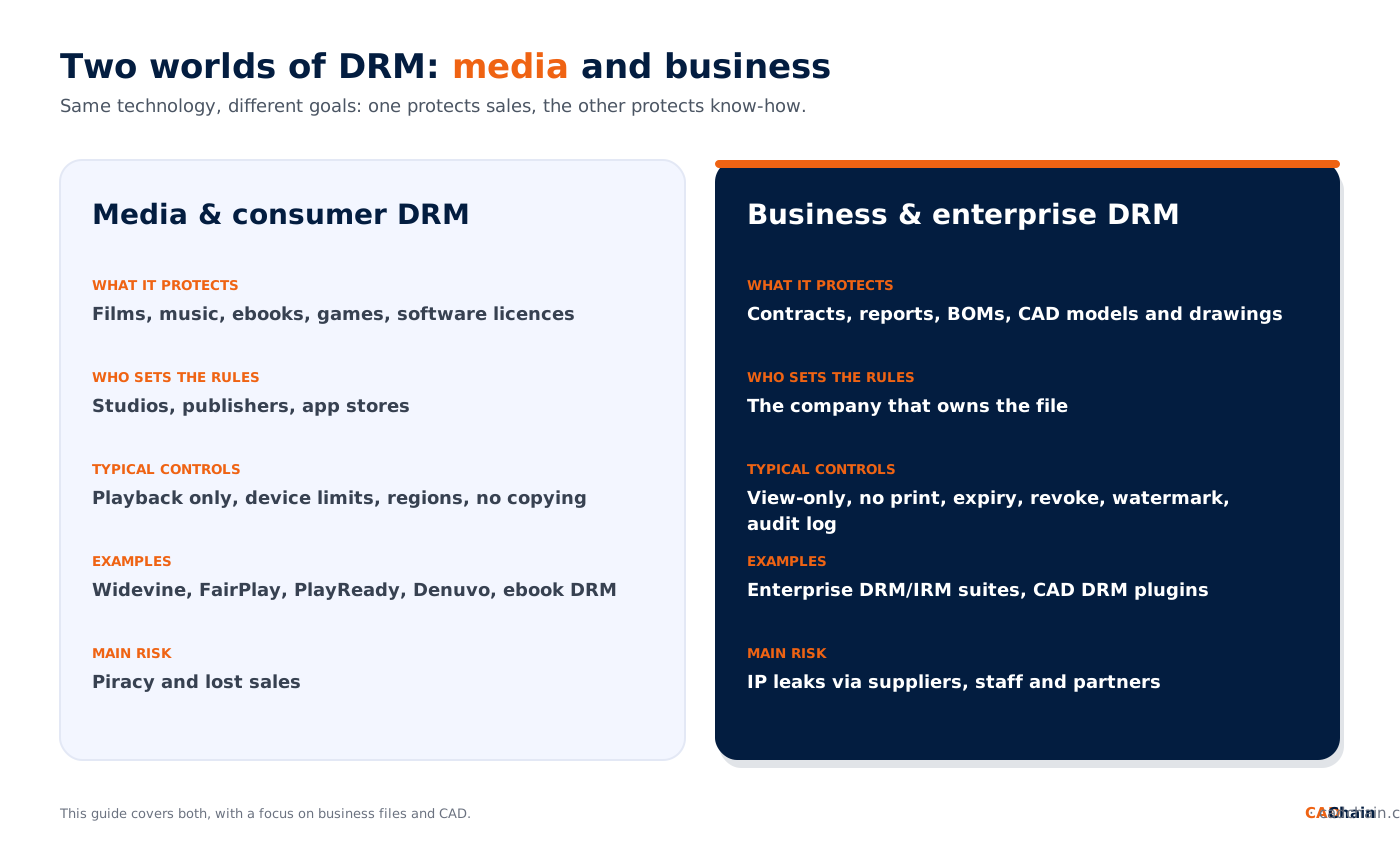
You meet DRM every day in Netflix, Spotify, Kindle books and games. Businesses use the same idea, often called enterprise DRM or information rights management, to protect contracts, reports and design files such as CAD models after they are sent to suppliers and partners. This guide explains how DRM works, its types, what it can and cannot do, the laws around it in the EU and US, and how to choose DRM for business files in 2026.
Key takeaways
- DRM keeps protection attached to the file. Encryption alone protects data at rest; DRM keeps control after the file is opened somewhere else.
- Every DRM system has the same building blocks: encryption, a licence or policy, a key server and a trusted app that enforces the rules.
- Media DRM protects sales; business DRM protects know-how. For engineering companies, the files that matter most are CAD models and drawings shared with suppliers.
- DRM is not magic: a determined person can still photograph a screen, and offline copies stay usable until their lease expires. Combine DRM with contracts, watermarks and proof of ownership.
- The law protects DRM (DMCA §1201 in the US, Article 6 of the InfoSoc Directive in the EU), but new EU rules on accessibility and repair limit how DRM may be used.
What is DRM?
Digital rights management is the use of technology to control access to and use of digital content. Instead of trusting the recipient, the content itself is locked, and only approved software, on approved devices, for approved people, can unlock it under the rules the owner sets.
DRM meaning: what the acronym stands for
DRM stands for digital rights management. The same letters are used for other things, such as the Direct Rendering Manager in Linux graphics, so check the context. In business security you will also see enterprise DRM (EDRM) and information rights management (IRM), which mean DRM applied to company documents.
What are the "rights" in digital rights management?
For films and music, the rights are copyrights: the publisher decides how you may play the content you bought or rented. For a company, the rights are usually contractual and confidentiality rights: who may see a design, whether a supplier may print it, and when access ends. The technology is the same; the purpose is different.
A short history of DRM
DRM examples you use every day
- Streaming video: Netflix, Disney+ and YouTube rentals encrypt every stream and limit resolution on untrusted devices.
- Music: downloads in Spotify and Apple Music play only inside the app while your subscription is active.
- Ebooks and audiobooks: Kindle and library loans tie books to your account and expire on time.
- Games: online activation and anti-tamper checks protect new releases.
- Business documents: a board report that opens only for named people and cannot be printed.
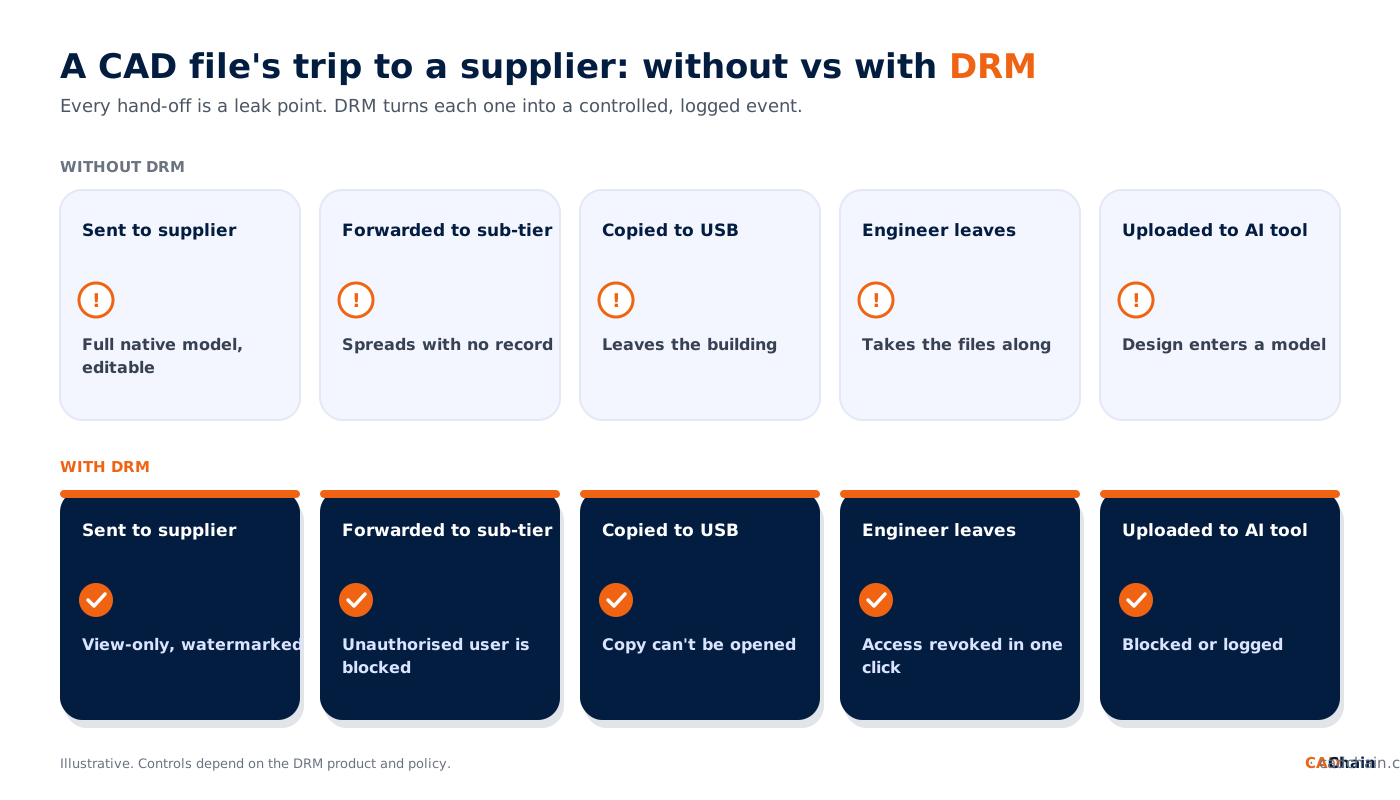
- Engineering files: a CAD model a supplier can view and quote from, but not edit, export or forward.
How does DRM work?
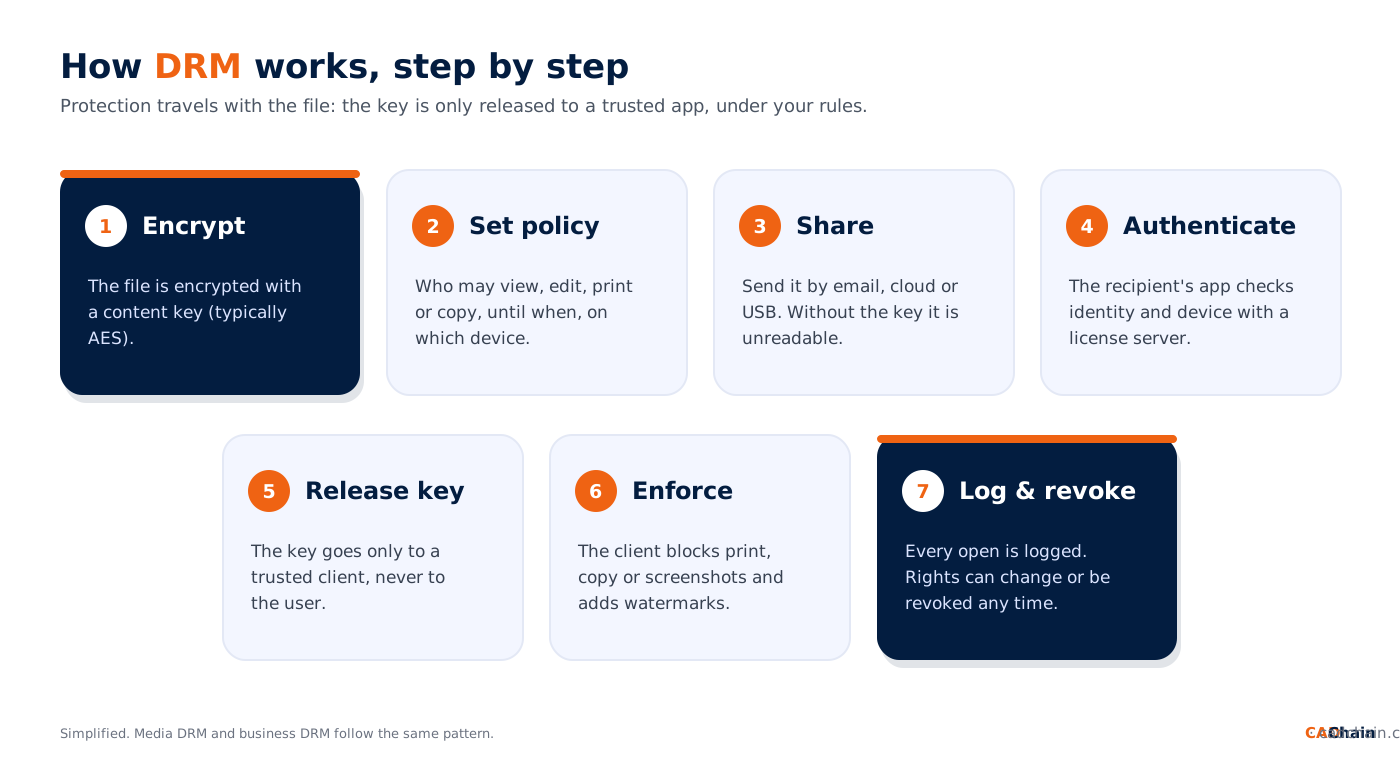
Every DRM system, from Netflix to a protected CAD file, follows the same basic steps:
- Encrypt: the file is encrypted with a content key, typically using AES.
- Set the policy: the owner decides who may view, edit, print or copy it, until when and on which devices.
- Share: the protected file travels by email, cloud or USB. Without the key it is unreadable.
- Authenticate: the recipient opens it in a DRM-aware app, which checks identity and device with a licence server.
- Release the key: the key is delivered only to a trusted client, never to the user directly.
- Enforce: the client applies the rules, blocking printing, copying or screenshots, and adding watermarks.
- Log and revoke: every action is logged, and the owner can change or revoke rights at any time.
Encryption and keys
The content is encrypted once with a symmetric key. The important part is key management: the key never travels with the file in readable form. It is wrapped for each user or device and released only after the licence server approves the request.
Licences and policies
A licence describes what a user may do: open, edit, print, copy, forward, for how long, on how many devices and from which locations. Policies can change after the file is shared, which is what makes DRM different from a password on a ZIP file.
The trusted client
DRM only works if the software that opens the file can be trusted to enforce the rules. In browsers, a Content Decryption Module handles decryption under the W3C Encrypted Media Extensions standard. Media DRM uses security levels: Widevine L1 decrypts inside a hardware trusted execution environment while L3 is software only, and Microsoft PlayReady SL3000 requires a hardware TEE while SL2000 is software-based. Business DRM uses a viewer, an app plugin or the native application itself as the trusted client.
Watermarks, logs and revocation
Visible watermarks with the viewer's name deter photographs and screenshots; forensic watermarks trace a leak back to its source. Audit logs record who opened what and when, including failed attempts. Revocation lets the owner cut access instantly, at least for online users. For the full technical picture, read our technical breakdown of DRM for engineers.
Types of DRM
Video and music DRM
Streaming services encrypt video with the Common Encryption standard (ISO/IEC 23001-7), so one file can be served to Google Widevine, Apple FairPlay and Microsoft PlayReady. Studios add HDCP on the cable to the screen and forensic watermarks for premium 4K content.
Ebook DRM
Ebook DRM ties a book to an account or device. Adobe transferred its ebook DRM platform to Wipro in 2025, and many libraries and publishers now use Readium LCP, a lighter, passphrase-based scheme standardised as ISO/IEC 23078-2.
Game and software DRM
Games use anti-tamper technology such as Denuvo and online account checks; software uses licence keys and activation servers. The goal is to protect the launch window, when most sales happen.
Enterprise DRM and information rights management
Enterprise DRM protects business documents: contracts, financial reports, designs and source files. Microsoft Purview Information Protection, for example, uses sensitivity labels and the Azure Rights Management service so that "encryption settings remain with your data, even when it leaves your organization's boundaries". The difference between the terms is mostly historical; see enterprise DRM vs IRM.
Online and offline DRM
Online DRM checks every open with the server, so revocation is instant. Offline DRM issues a lease that lets the file open without a connection for a set time. Microsoft's default offline licence lasts 30 days, and it recommends 7 days or no offline access for the most sensitive data, because a revoked file stays usable offline until its lease expires. More on managing offline access in DRM.
File-level vs folder-level protection
Folder permissions protect files only while they sit in a folder. File-level DRM protects the file wherever it goes. See file-level DRM vs folder security.
What DRM lets you control
The value of DRM lies in its granular permissions. Typical controls in business DRM, explained further in DRM access permission levels:
Location rules matter for export-controlled engineering data; see geographic restrictions in CAD DRM.
DRM vs encryption, DLP, watermarking and blockchain
These tools are often confused, but each protects a different moment in a file's life:
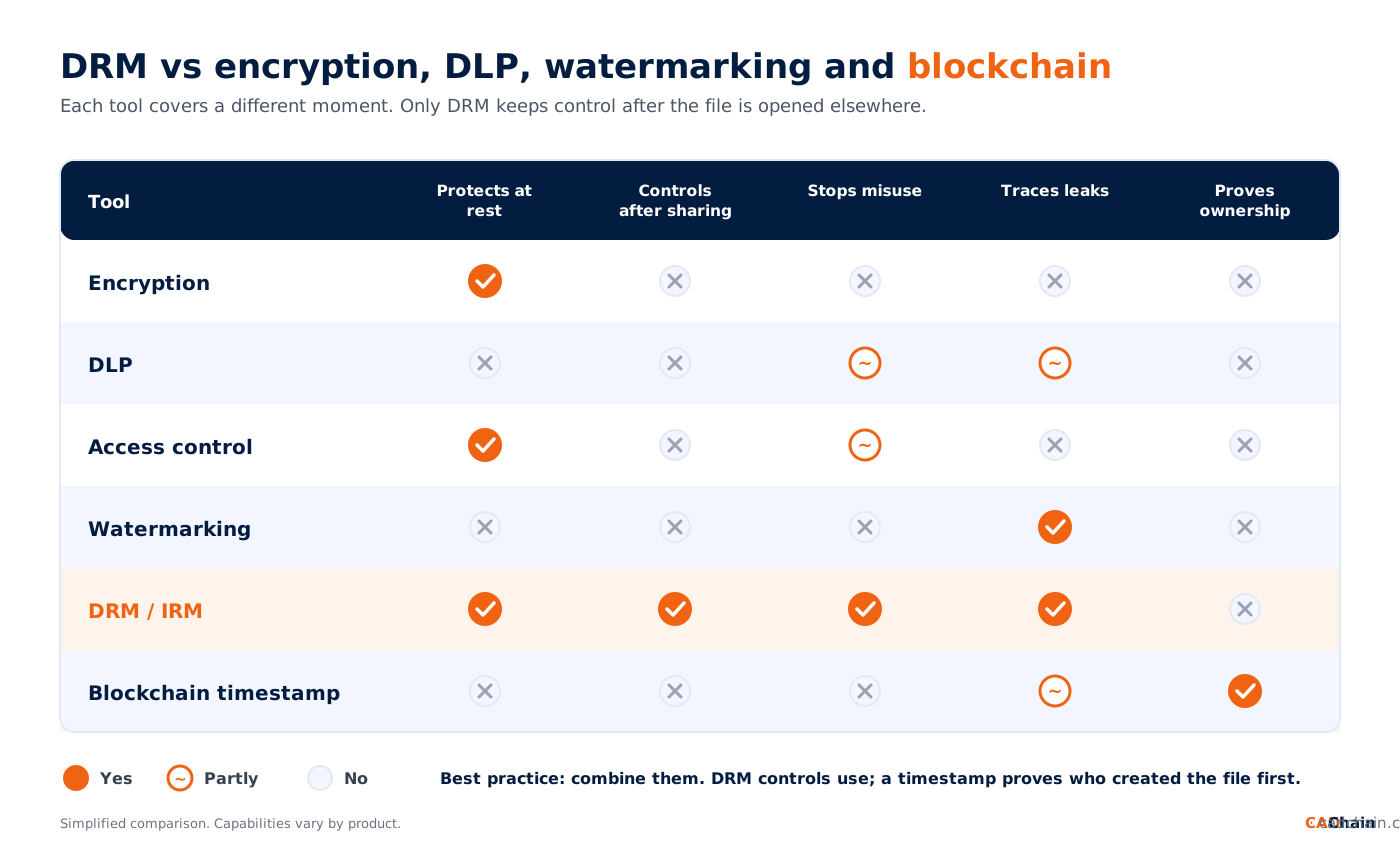
For engineering teams the right answer is a combination: DRM to control use, watermarks to deter and trace, and an independent timestamp as proof of ownership. More in DRM vs traditional CAD security and blockchain vs DRM for CAD.
Why businesses use DRM
Data breaches are expensive and increasingly involve partners: the average breach now costs $4.99 million (IBM, 2026), 48% of breaches involve a third party (Verizon DBIR, 2026), and only 37% of breached organisations encrypt sensitive data at rest and in transit (IBM, 2026). DRM addresses the exact gap these numbers describe: files that leave your systems.
Protecting IP and trade secrets
Trade secrets are only protected if you took reasonable steps to keep them secret, and you must be able to show those steps in court. DRM policies and audit logs are some of the strongest evidence you can have. See our trade secrets guide and IP protection playbook.
Sharing with suppliers and partners
Quotes, prototypes and production all require sending design data outside the company. DRM lets you share the file and still decide what happens to it, and take access back when the project ends.
Insider risk and AI tools
Departing employees and careless uploads are a major leak channel: regular employee use of AI tools rose from 15% to 45% in a year (Verizon DBIR, 2026). A DRM-protected file copied to a personal drive or pasted into an unapproved tool cannot be opened without a valid licence.
Compliance
DRM supports GDPR, export-control and security standards that require control over who accesses sensitive data. For personal data inside design files, read GDPR compliance with CAD DRM.
DRM for CAD and engineering files
Most DRM guides stop at PDFs and Office documents. Design data is harder, and it is where the most valuable IP of a hardware company lives.
Why CAD is harder to protect than a PDF
- Assemblies: one model references hundreds of part files that must all stay protected and linked.
- Native applications: engineers work in SolidWorks, Inventor or CATIA, not in a generic viewer.
- Exports: STEP, STL and other neutral formats can strip protection unless DRM covers them too.
- Large files and offline shop floors: protection must work without slowing work or needing constant connectivity.
Viewer-based vs native-app DRM
Viewer-based DRM lets suppliers see geometry in a secure viewer but not edit it. Native-app DRM works inside the CAD application, so partners can work normally while the file stays protected. Enterprise DRM vendors have started covering neutral CAD formats, and plugins exist for specific CAD tools; see DRM for SolidWorks files, DRM for Autodesk Inventor and persistent DRM protection for CAD.
DRM in PLM and PDM workflows
The most reliable setups apply protection automatically when files are checked out of PLM or PDM for external sharing, so engineers do not have to remember. See DRM integration with PLM.
Adding proof of ownership
DRM controls who uses a file; it does not prove who created it. A tamper-proof timestamp of each design version closes that gap and gives you evidence for disputes. Watermarking adds traceability; see digital watermarking of CAD geometry.
BORIS by CADChain brings both layers into your CAD software: DRM to control who can open, edit and share each design, and a blockchain-timestamped certificate of ownership for every version. You share files with suppliers under your rules, revoke access when a project ends, and keep dated proof of what you created.
👉 See how BORIS protects your CAD designs
For everything specific to design files, start with our complete guide to CAD file DRM.
Benefits and limitations of DRM
When DRM goes wrong
Consumer DRM has a mixed record. When Microsoft closed its ebook store in 2019, purchased books stopped working and customers were refunded. Ubisoft shut down the servers of The Crew in 2024 and buyers lost access to the game. In February 2025 Amazon removed the option to download Kindle books to a computer for USB transfer. These cases fuel criticism of DRM and the EU's Stop Destroying Videogames citizens' initiative, which gathered 1,294,188 verified signatures.
The lesson for business DRM is the same: choose a solution where you control the keys and can get your data back, and make sure your own files never become unreadable because a supplier or vendor disappears.
Does DRM stop piracy?
Not on its own. Research suggests convenient legal access matters more: when Netflix was blocked in Indonesia in 2016, searches for pirated films and shows rose 19.7%, and films removed from Netflix saw a 20% increase in piracy intent. DRM works best as one layer alongside good access, contracts and enforcement.
Is DRM legal?
Applying DRM to your own files is legal everywhere. The legal questions are about breaking DRM, and about limits on how DRM may be used.
United States: DMCA §1201
The Digital Millennium Copyright Act of 1998 makes it illegal to circumvent technological measures or to traffic in circumvention tools. Every three years the Copyright Office grants exemptions; the 2024 rules, effective 28 October 2024, added exemptions for repairing commercial food-preparation equipment and accessing vehicle data. The 2027 exemption cycle is under way, with renewed exemptions due to run from October 2027 to October 2030.
European Union: InfoSoc and DSM Directives
Article 6 of the InfoSoc Directive (2001/29/EC) requires member states to protect effective technological measures against circumvention, and Article 7 protects rights-management information from removal. The 2019 DSM Directive adds that contracts cannot override the research text-and-data-mining exception, while commercial TDM can be opted out of with machine-readable means.
Accessibility, repair and data access
- Accessibility: since 28 June 2025, the European Accessibility Act requires that DRM on e-books must not block accessibility features such as text-to-speech.
- Right to repair: the EU Right to Repair Directive (2024/1799), due to apply from 31 July 2026, bans hardware or software techniques that impede repair, unless justified by legitimate factors such as protecting IP. Only 10 member states transposed it on time.
- Data Act: the EU Data Act, applicable since 12 September 2025, explicitly allows data holders to use technical protection measures such as encryption and smart contracts.
- US repair: in July 2026 John Deere settled with the FTC and five states, agreeing to give farmers dealer-level repair tools, including part pairing, for 10 years.
Courts continue to enforce anti-circumvention rules: in September 2026 a Dutch court ordered a seller to stop selling Nintendo Switch circumvention devices. This is general information, not legal advice.
How to implement DRM in a company
DRM projects fail when they start with the tool and end with frustrated users. A practical rollout:
- Classify your files: decide which documents and designs are crown jewels and need DRM, and which only need basic access control.
- Map who shares what with whom: suppliers, partners, investors and internal teams each need different rights.
- Define a few standard policies: for example view-only for quotes, edit for partners, no-print for sensitive drawings. Fewer policies mean fewer mistakes.
- Pilot with one team and one supplier: test opening, editing, offline use and revocation in real conditions.
- Integrate: apply protection automatically from PLM, PDM or cloud storage so nobody has to remember.
- Train people: explain why, not just how. Engineers accept DRM when it does not slow them down.
- Review logs and adjust: use audit data to spot unusual access and to tighten or relax policies.
For engineering teams, see implementing CAD DRM in an enterprise, training engineers on DRM workflows and compliance monitoring with CAD DRM.
How to choose DRM software
Start from the files you need to protect and the people you share them with, not from a vendor list. Check:
- File types: Office and PDF only, or native CAD, assemblies and neutral formats?
- Recipient experience: no install, a viewer, a plugin or a full app? Friction kills adoption.
- Offline work: how long can files open without a connection, and how fast does revocation take effect?
- Identity: integration with your single sign-on and support for external users.
- Workflow integration: PLM, PDM, cloud storage and email.
- Audit and reporting: usable logs for security and legal evidence.
- Keys and exit: who holds the keys, and can you recover your files if you leave?
- Total cost: licences per user or per recipient, implementation and training.
For an engineering-focused checklist, read how to select a DRM vendor for engineering and the ROI of CAD DRM for SMEs.
DRM market and statistics (2026)
The future of DRM
- AI and data: as AI tools and agents read company files, DRM policies need to decide what an AI may open, summarise or upload.
- Zero trust: security is moving from protecting networks to protecting each piece of data, which is exactly what file-level DRM does.
- Proof of ownership: timestamps and ledgers complement DRM by proving who created a file and when.
- Post-quantum cryptography: long-lived design files need encryption that will survive future quantum computers; see quantum-resistant encryption for CAD.
- Fairer consumer DRM: EU rules on accessibility, repair and digital content are pushing DRM to respect users' rights.
Conclusion
DRM is simply a way to keep your rules attached to your files. For media companies it protects sales; for engineering and deep tech companies it protects the know-how in contracts, models and drawings that must be shared to do business. It is not a silver bullet, and it works best combined with contracts, watermarks and independent proof of ownership. But when your most valuable files leave the building every day, it is the only layer that goes with them.
All CADChain guides on DRM
This page is the starting point for DRM on our blog. The guides below go deeper into each topic, with a focus on CAD and engineering files.
DRM basics
- What is Digital Rights Management (DRM) for CAD Files?
- How DRM Works: Technical Breakdown for Engineers
- The Complete Guide to CAD File DRM Protection in 2026
- Persistent Protection: How DRM Follows Your CAD Files Everywhere
- File-Level DRM Protection vs Folder-Level Security
- Enterprise DRM vs Information Rights Management (IRM) for CAD
DRM compared with other protection methods
Access controls and permissions
- DRM Access Control Levels: View, Edit, Print, and Export Permissions
- View-Only CAD Access for Vendors: Implementation Guide
- Time-Limited CAD File Sharing for Project-Based Collaboration
- Revoking CAD File Access: How to Unshare Data After It's Sent
- Preventing CAD File Export to Competitor-Compatible Formats
- Offline Access Management for CAD DRM Systems
- Geographic Restrictions in CAD DRM: Regional Access Control
Rolling out DRM in a company
- Implementing CAD DRM: From Assessment to Enterprise Deployment
- Scaling CAD DRM from Pilot to Enterprise Deployment
- Training Engineers on DRM-Protected CAD Workflows
- Change Management for DRM Adoption in Engineering Teams
- Integration Challenges: DRM with Existing PLM Systems
- PLM Integration with CAD DRM Systems
- DRM Performance Impact: Effects on CAD Software Speed
- Edge Computing for CAD DRM in IoT Manufacturing Environments
Choosing DRM and measuring ROI
DRM for specific CAD software
Compliance, audits and legal evidence
FAQ: DRM and digital rights management
What does DRM stand for?
DRM stands for digital rights management: technology that controls how digital content can be accessed and used after it is distributed.
What is DRM in simple terms?
A digital lock on a file. Only approved people, using approved software, can open it, and only in the ways the owner allows.
What is an example of DRM?
Netflix and Spotify use DRM so you can stream but not copy content. Companies use DRM so a supplier can view a CAD model but not edit, print or forward it.
Is DRM the same as encryption?
No. Encryption protects data at rest and in transit; once the recipient decrypts it, the file is free. DRM keeps usage rules attached after the file is opened.
Is it illegal to remove DRM?
In most cases, yes. Circumventing DRM is restricted under DMCA §1201 in the US and Article 6 of the InfoSoc Directive in the EU, with specific exemptions such as some repair and research uses.
Does DRM actually stop piracy?
It raises the effort needed, but determined people can bypass it. Research shows convenient legal access reduces piracy as much as technical locks do.
Does DRM work offline?
Yes, through time-limited offline leases. The trade-off is that revoking access only reaches offline copies once their lease expires.
Can you revoke access to a file after sending it?
Yes, with DRM. The owner can change or remove permissions at any time; online users lose access immediately.
Can DRM stop screenshots or photos of the screen?
It can block screenshots in the protected app, but not a camera. Dynamic watermarks showing the viewer's name discourage photos and help trace leaks.
Can DRM protect CAD files?
Yes. CAD DRM protects native models, assemblies and neutral exports, either in a secure viewer or directly inside the CAD application.
How much does DRM software cost?
It varies from simple per-user document DRM to enterprise suites priced per seat and per external recipient. Factor in implementation and training, not only licences.
What is enterprise DRM?
Enterprise DRM, also called information rights management, applies DRM to business documents and designs, so companies control who can open, edit, print or share them inside and outside the organisation.
What is the difference between DRM and DLP?
DLP watches channels such as email, USB and the web inside your network and blocks risky transfers. DRM protects the file itself, wherever it ends up.
Is blockchain a replacement for DRM?
No. Blockchain timestamps prove ownership and creation dates; DRM controls access and use. They work best together.