On 13 October 2026, the US Justice Department announced that a 35-year-old OpenAI engineer had been charged with hiding an audio recording device in an executive conference room at one of the company's San Francisco offices. The device was found on or about 30 September, two days after it was allegedly installed, and the engineer was arrested by the FBI on 9 October.
It reads like a spy novel: a thumb-sized recorder wrapped in toilet paper and plugged into the back of a television, a second device in a bag left in another room, and chatbot prompts about how to build and hide such a device. But the lesson for founders and engineering managers is much more ordinary. The person charged was not a hacker breaking in from outside. He was an employee with a badge, a laptop and access to internal tools.
Most deep-tech companies will never face a case like this one. Almost all of them, however, rely on the same thing OpenAI relied on: that the people inside the building can be trusted with what they see, hear and download. Here is what is known about the case, what is not, and a practical checklist for protecting designs, code and confidential conversations from insider risk.
TL;DR: the OpenAI recording device case in one paragraph
Abdulrahman Alfozan, a Saudi national who had worked at OpenAI as an engineer since July 2025, is charged with using or trying to use a device to intercept oral communications. Prosecutors say he hid a recorder in an executive meeting room on or about 28 September, that OpenAI found it on or about 30 September, and that a similar device was later found in his bag. If convicted, he faces up to five years in prison. These are allegations, and no motive or third party has been made public. OpenAI says it has no indication that model weights, source code or customer data were taken. For every deep-tech company, the case is a reminder that the most valuable IP is often reachable by insiders, and that protection has to cover rooms, files and access rights, not only networks.
What happened at OpenAI?
According to the Justice Department's announcement, OpenAI staff discovered a hidden audio recording device on or about 30 September 2026. It had been inserted into a USB port on the back of a television in an executive conference room and was concealed in toilet paper. Its contents were encrypted.
OpenAI concluded that the device had been installed on or about 28 September. Security camera footage showed the engineer near the room on several dates before the discovery, even though, according to the complaint, he had no authority to enter it or attend the meetings held there. On 5 October, he allegedly looked behind the television where the device had been hidden. The same day, he allegedly left a bag unattended in a different room. OpenAI security opened it and found a second, similar recording device.
He was arrested on 9 October and made his first appearance in federal court in San Francisco on 13 October. A detention hearing is scheduled for 19 October. The FBI is investigating, and the case is being prosecuted by the US Attorney's Office for the Northern District of California together with the counterintelligence and export control section of the Justice Department's National Security Division.
How was the insider caught so quickly?
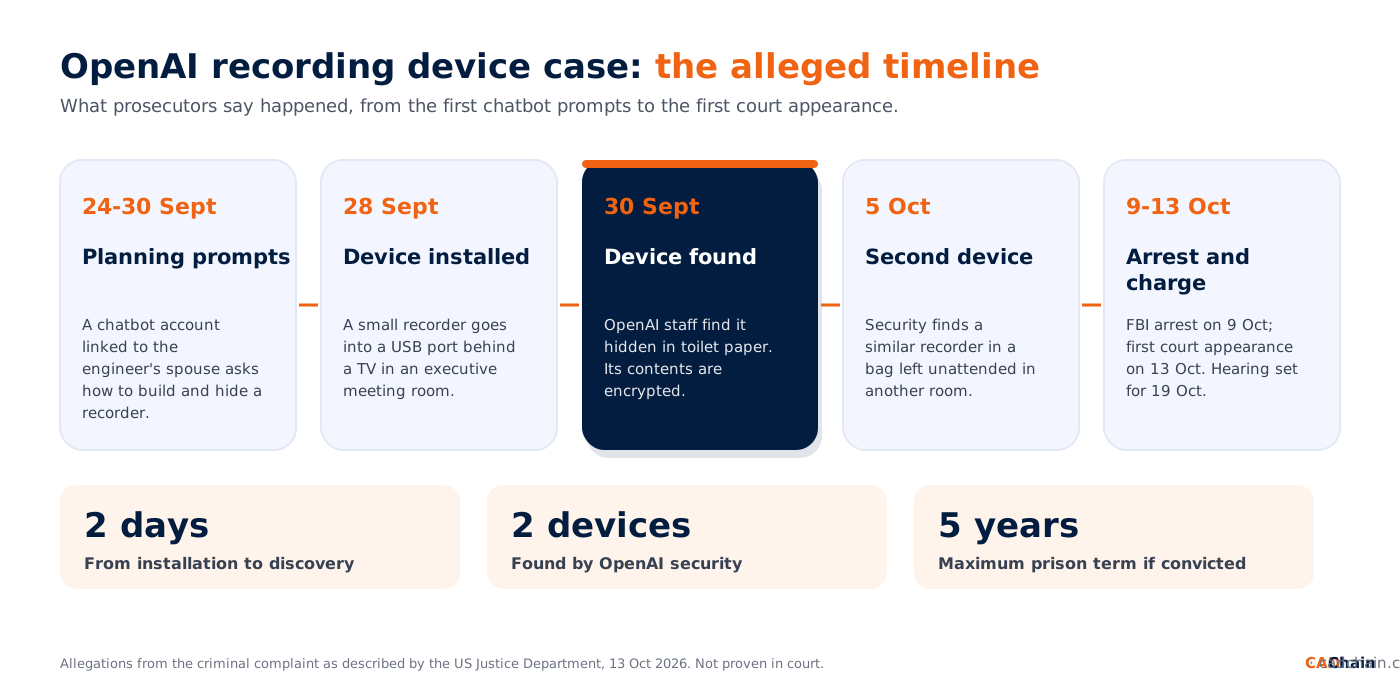
Two days passed between installation and discovery. That speed came from a combination of physical security, camera footage and records from internal tools. According to the complaint, the engineer had used a workplace productivity tool before 28 September to ask about building addresses, meeting rooms, room capacities, calendars, the locations of leadership and executives, and meetings with external partners.
Prosecutors also say that a chatbot account linked to his spouse, which shared identifiers with his own account, sent prompts between 24 and 30 September about building, installing and hiding an audio recording device. OpenAI said publicly that it used its own internal AI models to identify the person responsible and trace the device, and that it restricted his access and put him on leave while the investigation continued, before he was fired, as NBC News reported.
The detail matters for every company: the signals that exposed the alleged plan were ordinary ones. They were searches that did not fit someone's role, visits to rooms they had no reason to enter, and an object that did not belong. Few companies have OpenAI's security team, but most can log who opens what, notice unusual patterns and act calmly when something looks wrong.
What was at risk, and what does OpenAI say was not taken?
Meetings in that room, according to reports on the complaint, often involved highly confidential and non-public information. OpenAI said: "we have no indications of this individual inappropriately accessing or exfiltrating model weights, source code, or customer data." It also said it had evidence that he intended to place more recording devices in sensitive areas.
The charge itself is about intercepting conversations, not about stealing files. Nothing published so far says what, if anything, was recorded, who it was meant for, or why. The FBI framed the case in terms of protecting American AI innovation, but no foreign government or competitor has been named. Until a court rules, the engineer is presumed innocent.
This is where the case connects with engineering IP. A conversation in a board room can reveal a roadmap, a supplier, a price or a design decision. A CAD file reveals the design itself. Both are trade secrets only for as long as the company takes reasonable steps to keep them secret. Our guide to trade secrets for deep-tech startups explains what those reasonable steps look like, and trade secret protection for CAD designs covers the legal framework for engineering files.
Why are insider threats the hardest IP risk to stop?
Firewalls, VPNs and endpoint security are built to keep outsiders out. Insiders are already in. They have legitimate accounts, they know where the valuable material is, and their access looks normal until the moment it is misused. That is true whether the person is planting a device, copying a project folder to a USB drive before resigning, or simply sending a drawing to the wrong supplier.
- Departing employees are the classic case. Many trade secret disputes start with files copied in the weeks before someone leaves. We cover the warning signs in former employee IP theft and CAD file exfiltration.
- Physical media still matters. A USB port on a shared screen was the entry point in this case; a USB stick is still one of the easiest ways to take CAD files home. See USB drive CAD theft prevention.
- Targeted collection by competitors or state-linked actors often works through people, not code. Our overview of competitor industrial espionage tactics shows how design data is usually targeted.
- Honest mistakes leak almost as much as bad intent: wrong attachments, open share links and personal cloud folders. Read 8 ways employees accidentally leak CAD files.
Contracts help, but they act after the fact. An NDA or an IP assignment clause gives you a claim once damage is done; it does not stop a file from leaving. We explain this gap in why NDAs alone are not enough for CAD protection.
Make your CAD files protect themselves. CADChain adds file-level access control and blockchain proof of ownership to CAD files, so a copied file stays under your rules.
👉 Protect your CAD files with CADChain
What should deep-tech teams do now?
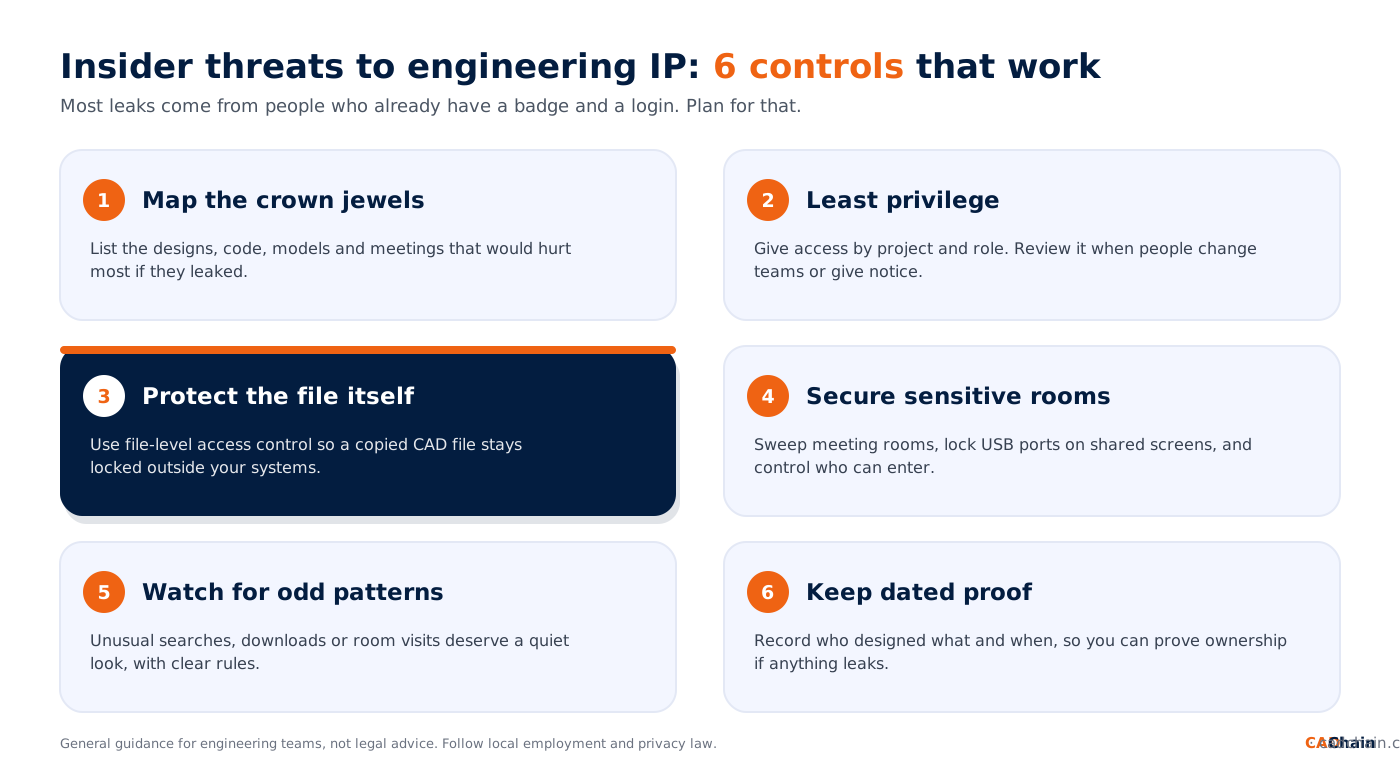
- Map your crown jewels. Write down the designs, code, models, supplier terms and recurring meetings that would hurt most if they leaked. You cannot protect everything equally, and you do not need to.
- Apply least privilege, and review it. Give access by project and role, not by default. Review it when people change teams, when projects end and when someone gives notice. Our guide to view, edit, print and export permission levels shows how fine-grained this can be for CAD files.
- Protect the file, not only the folder. Folder permissions stop working the moment a file is copied. File-level protection travels with the file. See file-level DRM versus folder-level security and the zero trust model for CAD file distribution.
- Secure the rooms where decisions are made. Control access to board and design review rooms, disable or lock unused USB ports on shared screens, and check rooms before sensitive meetings. Keep a list of what devices belong where.
- Watch for patterns, with clear rules. Searches, downloads and room visits that do not fit a role are worth a quiet check. Tell staff what is monitored and why, and follow local employment and privacy law, especially in the EU.
- Keep dated, independent proof of your designs. If something does leak, you will need to show what you created and when. A blockchain ownership registration and tamper-proof audit trails give you evidence that does not depend on anyone's memory.
- Prepare the response before you need it. Decide who leads an investigation, when to involve lawyers and the police, and how to restrict access quietly while you check the facts, as OpenAI says it did.
Employment agreements remain part of the toolkit. Make sure every engineer has signed clear IP and confidentiality terms; our article on employee IP agreements for CAD files lists what they should cover.
How does this fit the bigger picture?
The OpenAI case lands in a week when the value of engineering and creative data is in the news across our network. Three stories from our sister sites show the same theme from different angles:
- Autodesk announced at Autodesk University 2026 that Inventor will work as a connected client of Fusion, with an AI assistant that can act on models. We look at what that means for Inventor users and their data in Autodesk Inventor AI after AU 2026 on borisinventor.com.
- SOLIDWORKS 2027 was revealed with new AI features, and Dassault Systèmes says that AI is not trained on customer data. Our sister site explains what SOLIDWORKS 2027 means for your design data.
- AI training on creative work is now in court. A US judge found that a 3D artist had adequately alleged that a NoAI tag can count as copyright management information, although the case was dismissed for now. Read the details in the NoAI tag ruling explained for 3D artists on blendedboris.com.
Closer to home, the Joby trade secret verdict showed how expensive it can be when drawings and models end up in the wrong hands, and our analysis of the Schneider Electric PTC acquisition explains why the companies that host design data value it so highly. Whether the threat is a vendor, a competitor or a colleague, the answer is the same: know what you own, control who can use it, and keep proof.
Conclusion
The OpenAI recording device case is still at the allegation stage, and the most important questions, about motive and about who the recordings were for, have no public answers yet. What is already clear is how close the alleged plan came to the heart of one of the world's most valuable technology companies, and that it was stopped by ordinary signals spotted quickly.
For deep-tech founders and engineering managers, the takeaway is simple. Assume that some of your risk sits inside the building. Limit access to what each person needs, protect your most valuable files at the file level, secure the rooms where key decisions are made, and keep independent proof of what you have built. These steps cost far less than a single leaked design.
Protect your designs from insiders and outsiders alike. CADChain gives engineering teams blockchain proof of ownership and file-level access control for CAD files across systems.
👉 See how CADChain works
FAQ: the OpenAI hidden recording device case
What is the OpenAI engineer accused of?
Abdulrahman Alfozan is charged with using or trying to use a device to intercept oral communications. Prosecutors say he hid an audio recorder in an executive conference room at an OpenAI office in San Francisco on or about 28 September 2026.
When was the recording device found?
OpenAI staff found it on or about 30 September 2026, plugged into a USB port behind a television and hidden in toilet paper. A second, similar device was found on 5 October in a bag he had left in another room.
What penalty does he face?
If convicted, up to five years in prison, a fine of up to $250,000 and three years of supervised release. He is presumed innocent unless proven guilty.
Was any OpenAI technology stolen?
OpenAI says it has no indication that he accessed or took model weights, source code or customer data. It has not been made public whether the device recorded anything.
Who was the recording meant for?
That has not been made public. The Justice Department has not named a motive, a foreign government or any other recipient.
What is an insider threat?
Any risk to a company's data or IP from people who already have legitimate access, such as employees, contractors or partners. It covers deliberate theft and sabotage as well as honest mistakes.
How can engineering companies protect CAD files from insiders?
Limit access by role and project, protect files at the file level so copies stay controlled, monitor unusual downloads, secure meeting rooms and USB ports, and keep dated, independent proof of ownership.
Is it legal to monitor employees in the EU?
Some monitoring is allowed, but it must be necessary, proportionate and transparent under the GDPR and national employment law. Tell staff what is monitored and why, and take legal advice before you start.