TL;DR: what is intellectual property?
Intellectual property (IP) is any creation of the mind that the law lets you own: inventions, software, designs, brands, creative works and confidential know-how. It is protected by rights such as patents, copyright, trademarks, design rights and trade secrets, which let you stop others from using it without permission.
IP is also the most valuable asset class in the modern economy: about 92% of the market value of the S&P 500 is intangible. This guide explains what counts as IP, with examples, and then goes where most definitions stop: how to find the IP in your company, value it, show it on your balance sheet, borrow against it, manage it and turn it into revenue.
Key takeaways
- IP is both a legal right and a business asset. The right stops copying; the asset earns money through margins, licences, sales and financing.
- Most IP value is invisible: an estimated 83% of the intangible value of the world's largest companies does not appear in their financial reports.
- You cannot manage what you have not listed. An IP register of inventions, code, CAD data, datasets, brands and know-how is the first step.
- IP can be valued with three approaches: cost, market and income. Relief from royalty is the most common for patents and brands.
- Europe is building the plumbing for IP-backed loans, but in 2026 only 13% of SMEs with IP rights try to use them as collateral.
What is intellectual property?
WIPO, the United Nations agency for IP, defines intellectual property as creations of the mind: inventions, literary and artistic works, designs, and the symbols, names and images used in commerce. Unlike a machine or a building, IP is intangible. Many people can use the same idea at the same time, which is exactly why the law creates exclusive rights: without them, anyone could copy what took you years to build.
Intellectual property in simple terms
Think of IP as knowledge you can own. A new battery chemistry, the source code of your app, the CAD model of a drone frame, your company name and the training data behind your AI model are all knowledge. The law turns some of that knowledge into property you can sell, license or defend in court.
IP, IP rights and intangible assets: what is the difference?
All IP rights are intangible assets, but not all intangible assets are IP. Customer relationships, a trained team and market reputation have value, but no IP right protects them as such. For the legal system behind the rights, read our guide to intellectual property law. For what each IP right lets you stop and what it cannot, see intellectual property rights explained.
Types of intellectual property at a glance
Examples of intellectual property
Every company owns more IP than it thinks. Typical examples by type of business:
Famous examples show how different IP can be: the formula for Coca-Cola is a trade secret, the shape of its bottle is protected as a trademark and design, and the brand itself is one of the most valuable trademarks in the world.
Why intellectual property matters: the intangible economy
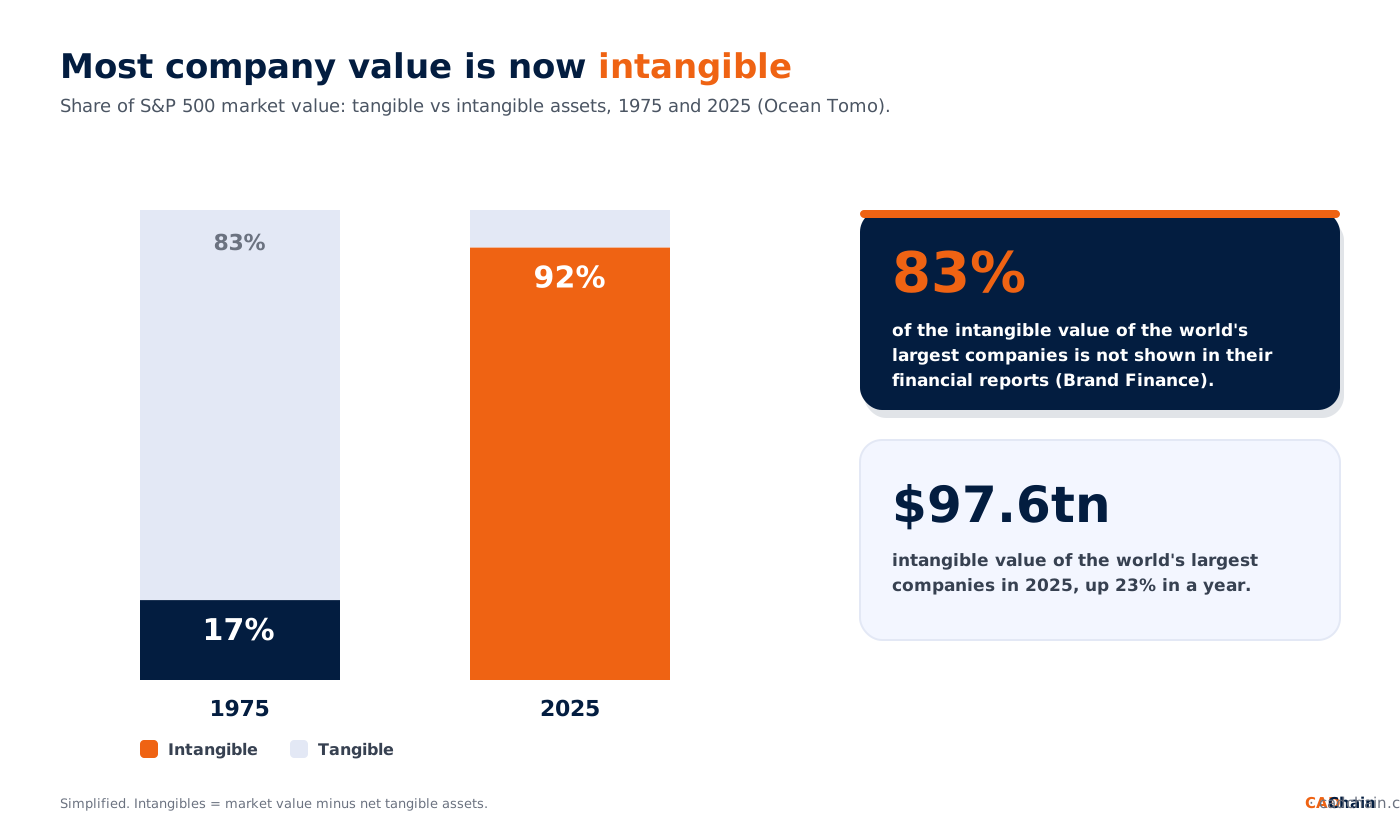
In 1975, tangible assets such as factories and inventory made up 83% of the market value of the S&P 500. By the end of 2025, intangibles made up about 92%, according to Ocean Tomo's 2025 study. Brand Finance puts the intangible value of the world's largest companies at a record $97.6 trillion in 2025, up 23%, and estimates that 83% of it is not reported in their accounts.
The effect is not limited to tech giants. In the EU, IP-intensive industries generate about 47.9% of GDP and 30.6% of jobs (EPO/EUIPO, 2026), SMEs that own registered IP rights earn 44% more revenue per employee, and startups that file for patents or trademarks early are up to 10.2 times more likely to raise funding. Yet fewer than 1 in 10 EU SMEs own any registered IP.
What counts as IP in your company? Build an IP inventory
Before you can protect or monetise IP, you need to know what you have. An IP inventory, often called an IP register, lists every asset with its owner, location and protection. For a deep tech company it usually looks like this:
For each item, record who created it, when, under which contract, and whether the company really owns it. Ownership gaps with founders, contractors and universities are the most common problem investors find; see CAD file ownership: legal proof and documentation.
How intellectual property creates business value
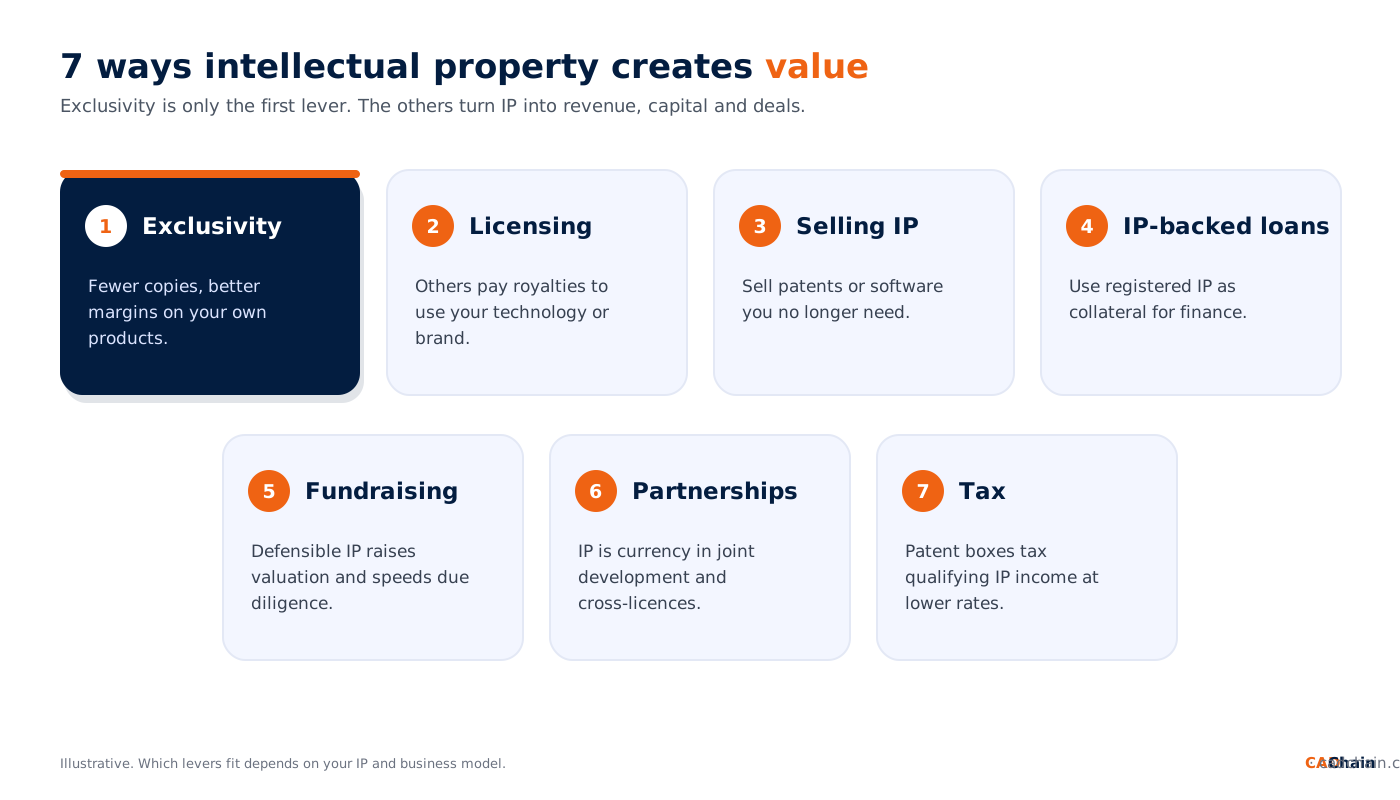
- Exclusivity and margins. Protected products face fewer copies, so you can charge for the value you create instead of competing on price.
- Licensing and royalties. Others pay to use your technology or brand, in a field, territory or market you do not serve yourself. Cross-border payments for the use of IP passed $1 trillion in 2022 (WIPO).
- Selling IP. Patents and software can be sold outright, for example when you pivot or exit a market.
- IP-backed financing. Lenders in a growing number of countries accept IP as collateral for loans (more below).
- Fundraising and valuation. Investors pay for defensibility. A clean, well-documented IP position raises valuation and speeds up due diligence.
- Partnerships and cross-licensing. IP is a currency in joint development deals and in settling disputes.
- Tax. Patent box regimes such as the Dutch innovation box tax qualifying IP income at a reduced rate (9% in the Netherlands).
How to value intellectual property
IP valuation estimates what an IP asset is worth for a purpose: a licence, a sale, a funding round, a loan, tax planning or a dispute. Valuers follow the International Valuation Standards (IVS 210 Intangible Assets) and, for brands, ISO 10668. They use three approaches:
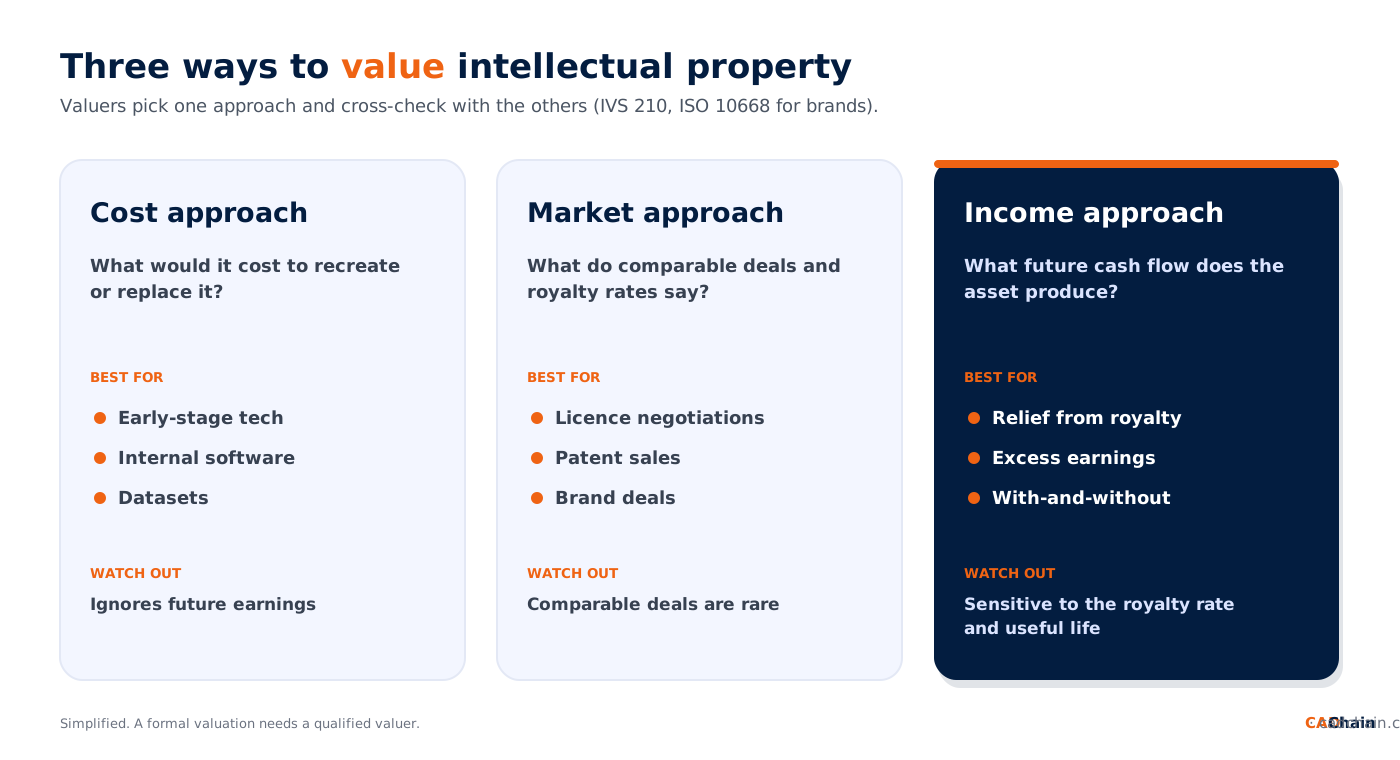
A practical rule for founders: you rarely need a formal valuation until a licence, sale, loan or tax structure depends on it. Until then, keep the inputs ready: what each asset is, what it protects, what revenue depends on it, and evidence of when it was created.
Intellectual property on the balance sheet
Accounting rules explain why so much IP value is invisible. Under IFRS (IAS 38), research costs are always expensed. Development costs can be capitalised only when six conditions are met, including technical feasibility and probable future benefits. Internally generated brands, customer lists and similar items can never be recognised. In US GAAP, R&D is generally expensed as incurred.
So a startup with valuable patents and code may show almost no intangible assets until it is acquired, when the buyer suddenly records them at fair value. Standard setters know this is a problem: the IASB has a research project on intangible assets and was still gathering evidence on investor needs in May 2026. Until rules change, disclose your IP position in investor materials and management reports instead of relying on the balance sheet.
Can you borrow against intellectual property?
Yes, in principle, and Europe is pushing to make it normal. In April 2026 the EUIPO published a study on IP-backed finance that estimates an addressable market of €70–150 billion a year, against an SME credit gap of about €365 billion. But only 13% of SMEs with IP rights try to use them as collateral, mainly because banks find IP hard to value and lack data on comparable deals. The EUIPO executive brief recommends a European valuation framework based on international standards, structured IP disclosure and credit guarantees.
The European Commission's proposed EU Innovation Act of September 2026 would go further, with an EU-wide IP valuation framework and a digital marketplace for licensing and selling IP, run from the EUIPO. Outside the EU, several UK banks and dedicated programmes in Canada already lend against IP. If you want to be ready, the steps are the same as for good IP management: a clean register, clear ownership, registered rights where possible and evidence of how each asset earns money.
How to manage intellectual property
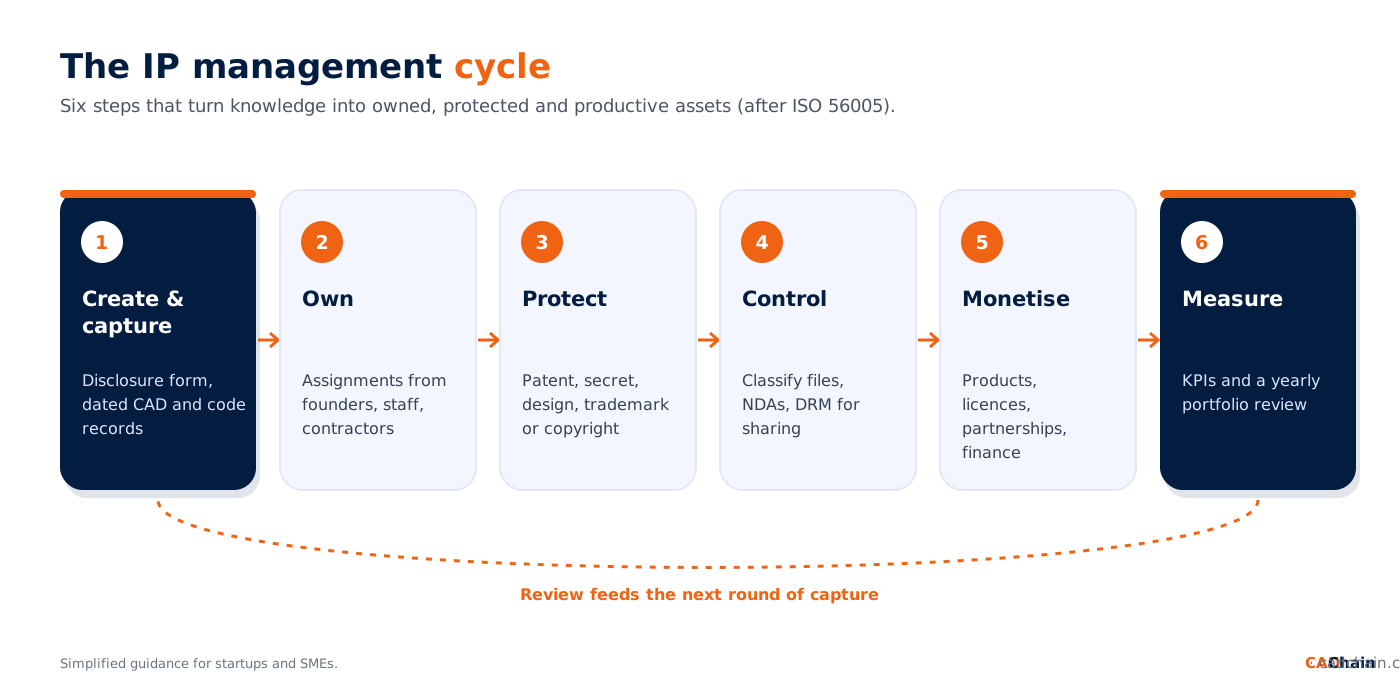
IP management is the set of processes that make sure valuable knowledge is captured, owned, protected and used. The international guidance standard ISO 56005 describes how to embed it in innovation management. For a startup or SME it comes down to six steps:
- Create and capture. Make invention disclosure easy: a short form, a monthly review, and dated records of CAD versions, code and experiments.
- Secure ownership. Founder, employee and contractor assignments in writing, university licences checked, open-source use tracked.
- Choose the protection. For each asset, decide between patent, trade secret, design, trademark or copyright, and file before you disclose.
- Control access. Classify sensitive files and share them under NDA and technical controls such as digital rights management.
- Use and monetise. Link each right to revenue: products, licences, partnerships or financing. Drop rights that no longer pay their renewal fees.
- Measure and review. Track a few KPIs and review the portfolio before every funding round and once a year.
IP management KPIs that matter
What destroys the value of intellectual property
- Leaks: a trade secret that leaks is gone for good. Former employees and suppliers are the usual channels; see the true cost of CAD IP theft.
- Ownership gaps: IP created by contractors or founders without assignments may not belong to the company at all.
- Early disclosure: publishing or pitching before a patent filing can destroy novelty, especially in Europe.
- Infringement: a product that infringes someone else's patent can be blocked, whatever IP you own yourself.
- Counterfeits: global trade in fake goods reached $467 billion, 2.3% of world imports (OECD/EUIPO, 2025).
- Lapses and poor records: missed renewal fees, and no evidence of what you created and when.
Intellectual property in engineering and CAD data
For hardware companies, the most valuable IP is often not in patents at all, but in CAD models, drawings and the know-how behind them. That IP is copyright and trade secret by default, which means its value depends on two things: being able to prove you created it, and keeping control over who sees it. Every RFQ, supplier and contractor is a point where that control can slip.
BORIS by CADChain turns your CAD files into managed IP assets inside your CAD software. Each design version gets a blockchain-timestamped certificate of ownership, so your IP register is backed by dated proof, and DRM controls who can open, edit and share every file with suppliers.
👉 See how BORIS protects your CAD designs
More on evidence: blockchain evidence in IP litigation and protecting CAD intellectual property.
Support for SMEs: making IP affordable
- EUIPO SME Fund 2026: an IP Scan voucher (90% of the cost, up to €1,620 depending on the country) gives you an expert review of your IP; further vouchers cover trademarks and designs (75%, up to €700) and patents. Applications run until 4 December 2026 or until funds run out.
- EPO and USPTO fee reductions: 30% off main EPO fees for micro-entities and others, and 60–80% off most USPTO fees for small and micro entities.
- National help: many national patent offices offer free first consultations for startups, and the EU IP Helpdesk answers questions at no cost.
Intellectual property statistics (2026)
Conclusion
Intellectual property is knowledge the law lets you own, and in 2026 it is where most company value lives. Treating it only as a legal topic misses the point. List what you have, make sure you own it, protect each asset with the right tool, control who can access it, link it to revenue and keep the evidence. Do that, and IP stops being an invisible cost centre and becomes what investors, lenders and buyers increasingly pay for.
This is general information, not legal, tax or accounting advice.
This is general information, not legal, tax or accounting advice.
FAQ: intellectual property
What is intellectual property in simple words?
Intellectual property is knowledge you can own: inventions, designs, software, brands, creative works and confidential know-how, protected by rights such as patents, copyright, trademarks and trade secrets.
What are the 4 main types of intellectual property?
Patents, copyright, trademarks and trade secrets. Design rights, database rights and a few specialist rights complete the picture.
What are examples of intellectual property?
A patented sensor, the source code of an app, a CAD model, a company logo, a product's shape, a secret manufacturing process and an AI training dataset are all examples.
Is intellectual property an asset?
Yes. IP is an intangible asset that can be sold, licensed, used as collateral and valued, although accounting rules often keep self-created IP off the balance sheet.
How do you value intellectual property?
With the cost, market or income approach. For patents and brands, the relief-from-royalty method, which values the royalties you save by owning the asset, is the most common.
Can I get a loan using my patents or trademarks?
Increasingly, yes. Some banks and public programmes accept IP as collateral, and the EU is building a valuation framework to make IP-backed loans more common.
Who owns intellectual property created at work?
Often the employer, depending on the country and the contract. Contractors and co-founders usually keep their IP unless they sign an assignment.
What is IP management?
The processes that capture, own, protect, use and measure a company's IP. ISO 56005 gives international guidance on it.
How long does intellectual property last?
Patents up to 20 years, designs up to 25 years, copyright for the author's life plus 70 years, and trademarks and trade secrets potentially forever.
Why is intellectual property important for startups?
It protects your lead, raises valuation, speeds up due diligence and can be licensed, sold or used to raise finance.