The artificial intelligence landscape keeps moving fast, but not every headline is a breakthrough you can build on. This guide covers the 10 breakthrough AI/ML technologies transforming industries in 2026: AI agents that use tools, reasoning models, multimodal and on-device models, federated learning, AI for protein science, weather and mathematics, robot foundation models and the first steps of quantum computing towards AI. For each one we name a real system, checked on its maker's official page in October 2026, instead of vague promises or made-up statistics.
TL;DR: The AI and machine learning breakthroughs that matter most in 2026 are agents that act through open standards such as the Model Context Protocol, reasoning models (including open-weight ones such as DeepSeek-R1), multimodal and on-device models, and federated learning for private data. In science, AI earned a Nobel Prize for protein structure prediction, runs operational weather forecasts at ECMWF and reached gold-medal standard at the International Mathematical Olympiad. Robot foundation models and error-corrected quantum chips are the next frontier. Start with one small pilot, and protect the data and IP you feed these systems.
Below, we explain what each technology does, where it is already changing industries, and what founders, engineers and deep-tech teams should watch. Alongside these breakthroughs, we look at how they meet scientific computing, simulation and digital twins, where platforms such as JuliaHub work.
Boost Your SEO by Getting Featured in Business Blogs
We publish content about startups, tech, funding, research, etc. that ranks well not only in Google but also in Perplexity, ChatGPT, Grok and other AI tools.
👉 Get featured now!
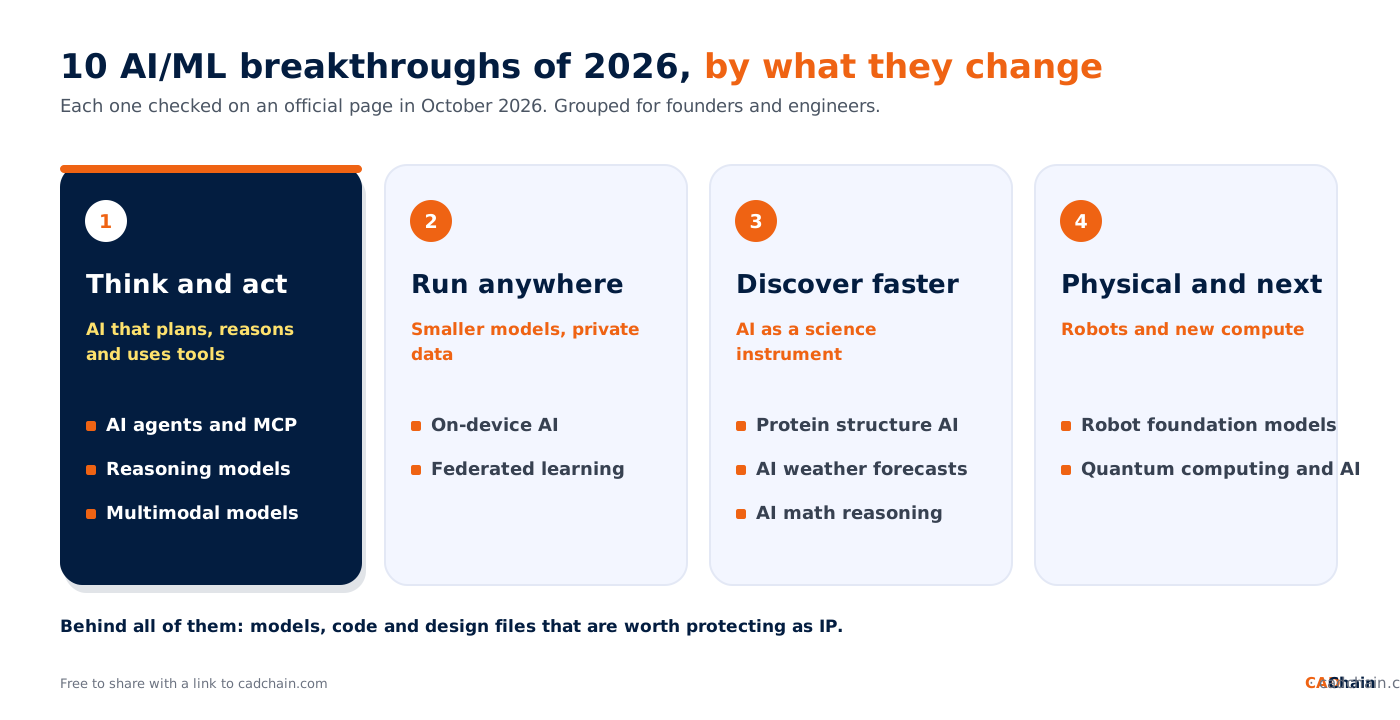
The 10 Breakthrough AI and Machine Learning Technologies of 2026
The list runs from the technologies you can use in your company this week to the ones that are still mostly in research labs. If you want the model-by-model view instead, see our overview of new AI model releases; for physical products, see the top 10 new technology inventions of 2026.
1. AI Agents and the Model Context Protocol (MCP)
An AI agent does not just answer a question: it plans a task, calls tools, reads data and takes actions. The breakthrough that made agents practical is not one model but shared plumbing. The Model Context Protocol, which Anthropic created, gives AI models a standard way to connect to tools, data and applications.
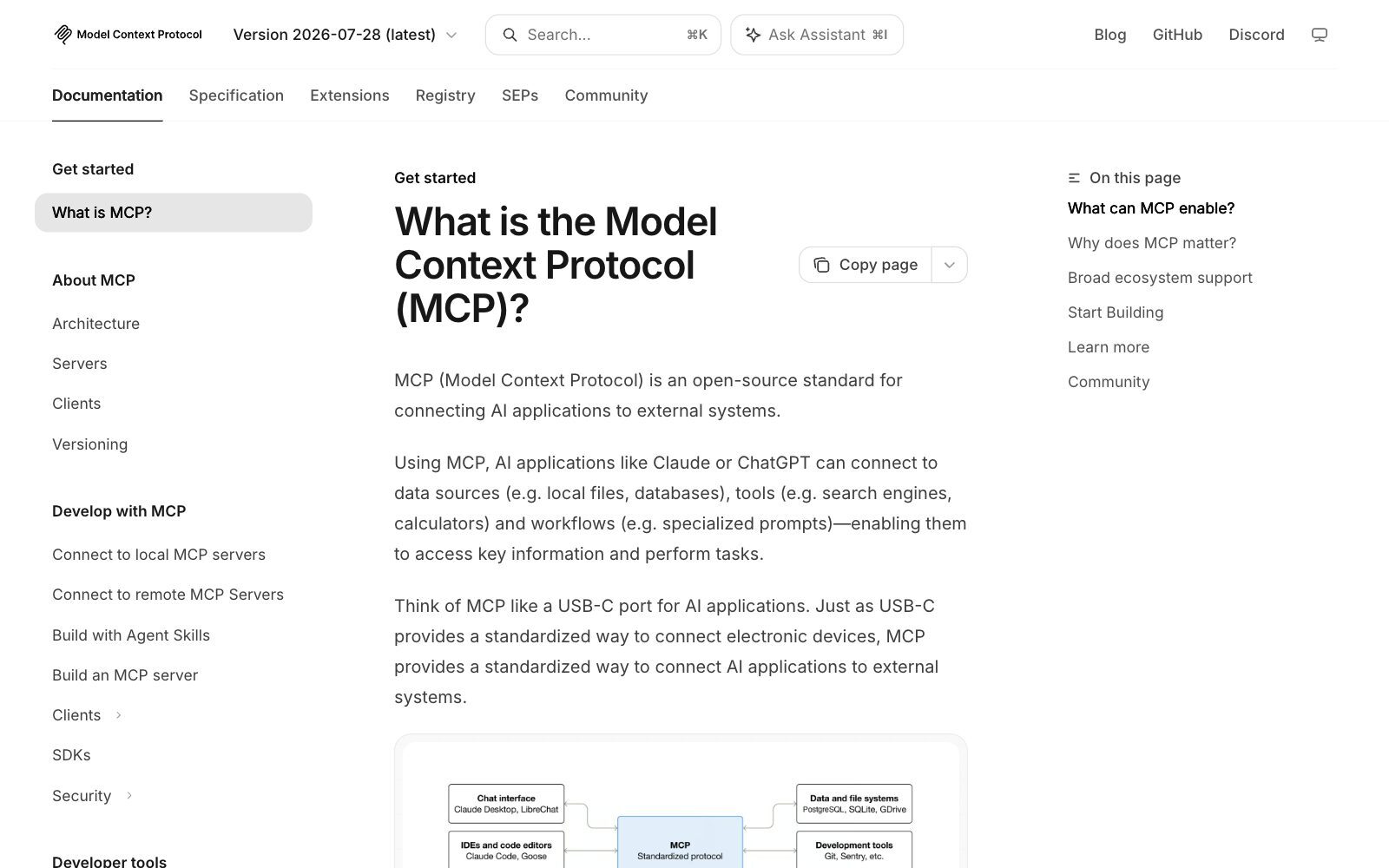
- Real example: On 9 December 2025 the Linux Foundation announced the Agentic AI Foundation, with three founding projects: MCP from Anthropic, goose from Block and AGENTS.md from OpenAI. A standard owned by a neutral foundation is much easier for companies to adopt. Our guide on how to connect the Tilda MCP server to Claude Code shows MCP at work on a real website.
- Industries it is changing: Software development, customer service, back-office automation, and engineering, where agents can draft and check designs. Read where a CAD AI agent fits in the design workflow for an engineering example.
- What to watch: Permissions. An agent that can read your drive can also leak it, so decide which files and systems each agent may touch. The story of OpenClaw and the race for agent builders shows how fast this field moves.
2. Reasoning Models
Reasoning models spend more computation at answer time: they work through a problem step by step before replying. This makes them much better at maths, code and multi-step analysis than earlier chat models.
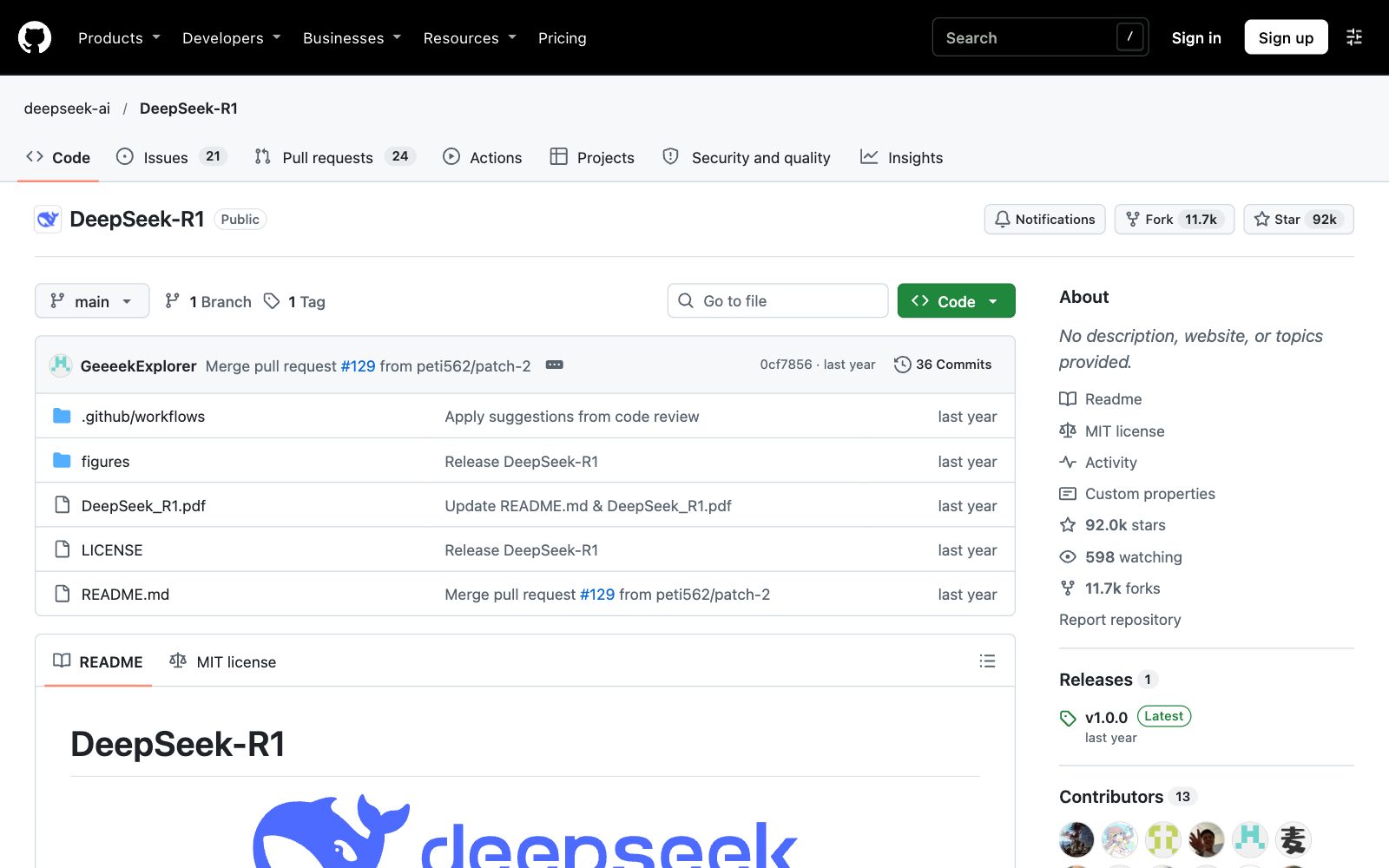
- Real example: DeepSeek released DeepSeek-R1 on 20 January 2025 and reported performance on par with OpenAI-o1 in maths, code and reasoning. Its code and models were released under the MIT License, and six smaller distilled models were open-sourced too, which brought strong reasoning to teams that want to run models on their own hardware.
- Industries it is changing: Finance and analytics, scientific computing, software engineering and education. Our list of math GPT tools shows what this means for everyday calculations.
- What to watch: Cost and speed. Reasoning takes longer and uses more compute per answer, so use it for hard problems and a faster model for simple ones.
3. Multimodal Foundation Models
A multimodal model takes in and produces more than text: images, audio, video and documents in one model. Instead of separate systems for vision, speech and language, one model can read a drawing, listen to a question and answer in writing.

- Real example: Google DeepMind built its Gemini Robotics models on Gemini 2.0, a multimodal model, and added physical actions as a new output (see technology 9). Most leading model families now accept images and documents as input; our overview of new AI model releases compares them.
- Industries it is changing: Manufacturing quality control, insurance claims, medical imaging, retail search and accessibility tools that describe images to blind and low-vision users.
- What to watch: Data rights. A model that reads drawings and photos can also absorb confidential designs, which is why generative AI and CAD IP matters for engineering teams.
4. Small Language Models and On-Device AI
Not every task needs a giant model in the cloud. Techniques such as quantization (storing model weights with fewer bits), distillation (training a small model on a big one) and better small architectures now let useful models run on phones, laptops and edge devices.
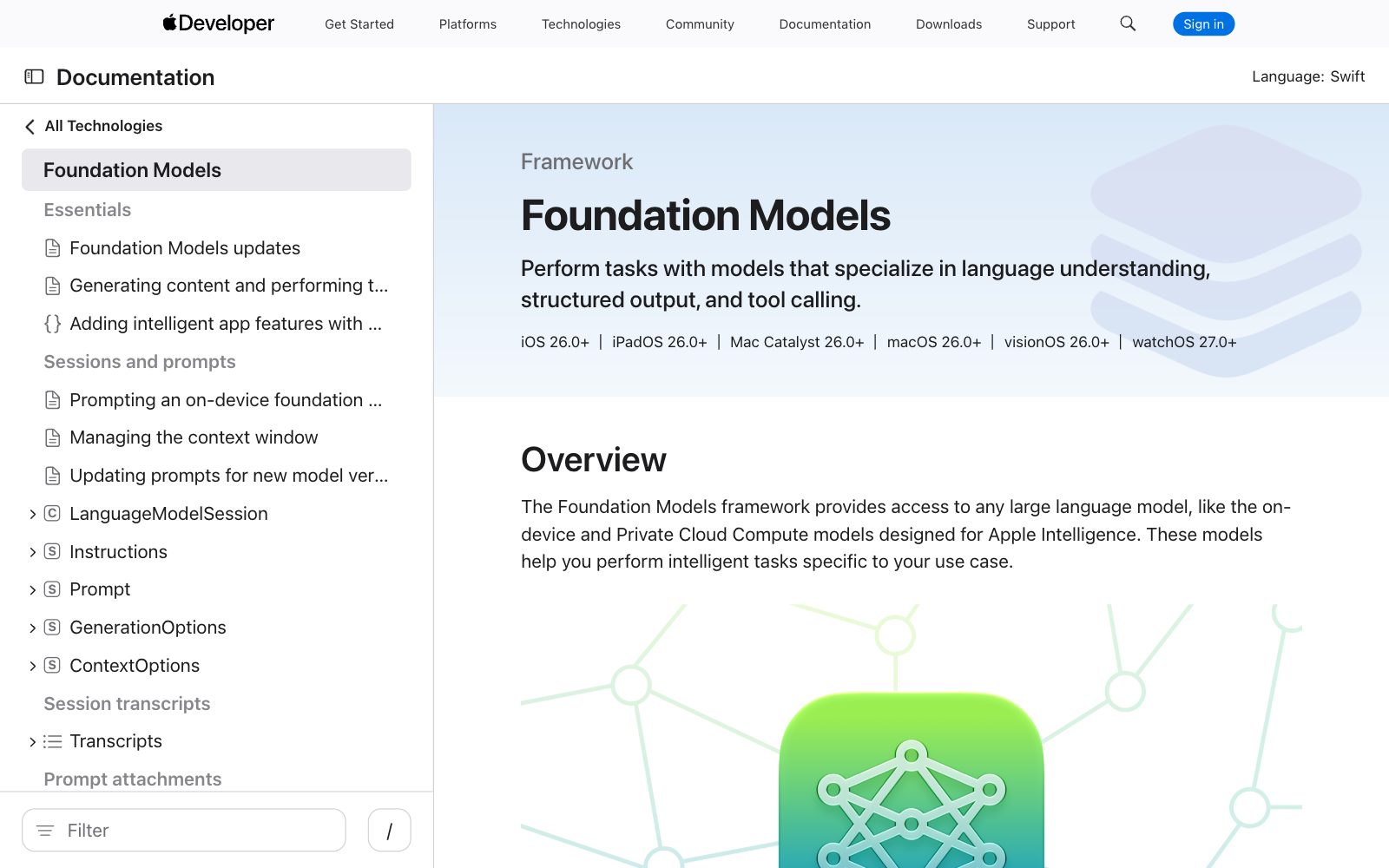
- Real example: At WWDC in June 2025 Apple announced the Foundation Models framework, which gives developers access to the on-device Apple Intelligence model. Apple says apps can use it offline, with privacy protected and inference free of cost, in as few as three lines of Swift code.
- Industries it is changing: Consumer apps, field service, healthcare devices and factories, where data should not leave the site. Our article on edge computing for CAD DRM explains the same idea on the shop floor.
- What to watch: Small models are less capable than the largest ones. Test them on your real task before you move work off the cloud.
5. Federated Learning and Privacy-Preserving AI
Federated learning trains a shared model across many devices or organizations without collecting their data in one place. Each site trains locally and only model updates are combined. Techniques such as secure aggregation and differential privacy add further protection.
- Real example: Flower, an open-source federated learning framework from Flower Labs, released under the Apache 2.0 license, is one of the most widely used tools for this, and it now also supports federated fine-tuning of large language models.
- Industries it is changing: Hospitals sharing insights without sharing patient records, banks fighting fraud together, and manufacturers learning from many plants. See federated learning for collaborative CAD security for the engineering angle.
- What to watch: Federated learning protects raw data, but model updates can still leak information. Combine it with access control and clear agreements on who owns the shared model.
6. AI for Protein Science and Drug Discovery
Predicting how a protein folds from its amino acid sequence was a 50-year-old problem in biology. Deep learning solved much of it, and AI is now also used to design new proteins.
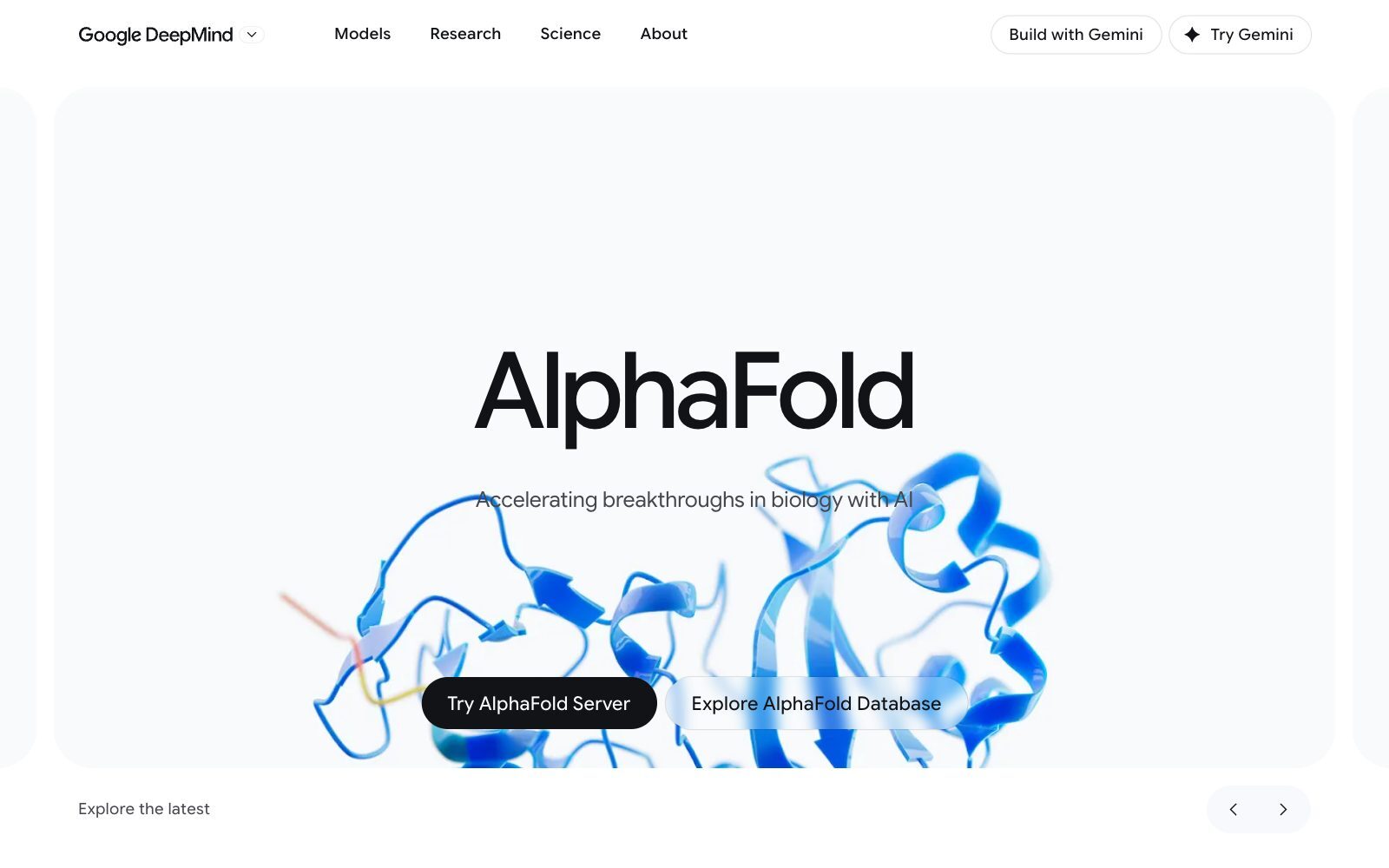
- Real example: The Nobel Prize in Chemistry 2024 went half to David Baker "for computational protein design" and half jointly to Demis Hassabis and John Jumper of Google DeepMind "for protein structure prediction", the work behind AlphaFold.
- Industries it is changing: Pharmaceuticals, biotech, agriculture and materials science. For the clinical side, read our overview of artificial intelligence in medicine.
- What to watch: A predicted structure is a hypothesis, not a drug. Lab validation, clinical trials and regulators still set the pace.
7. Machine Learning Weather Forecasting
Machine learning weather models learn from decades of past weather data and produce a global forecast in minutes instead of hours of supercomputer time.
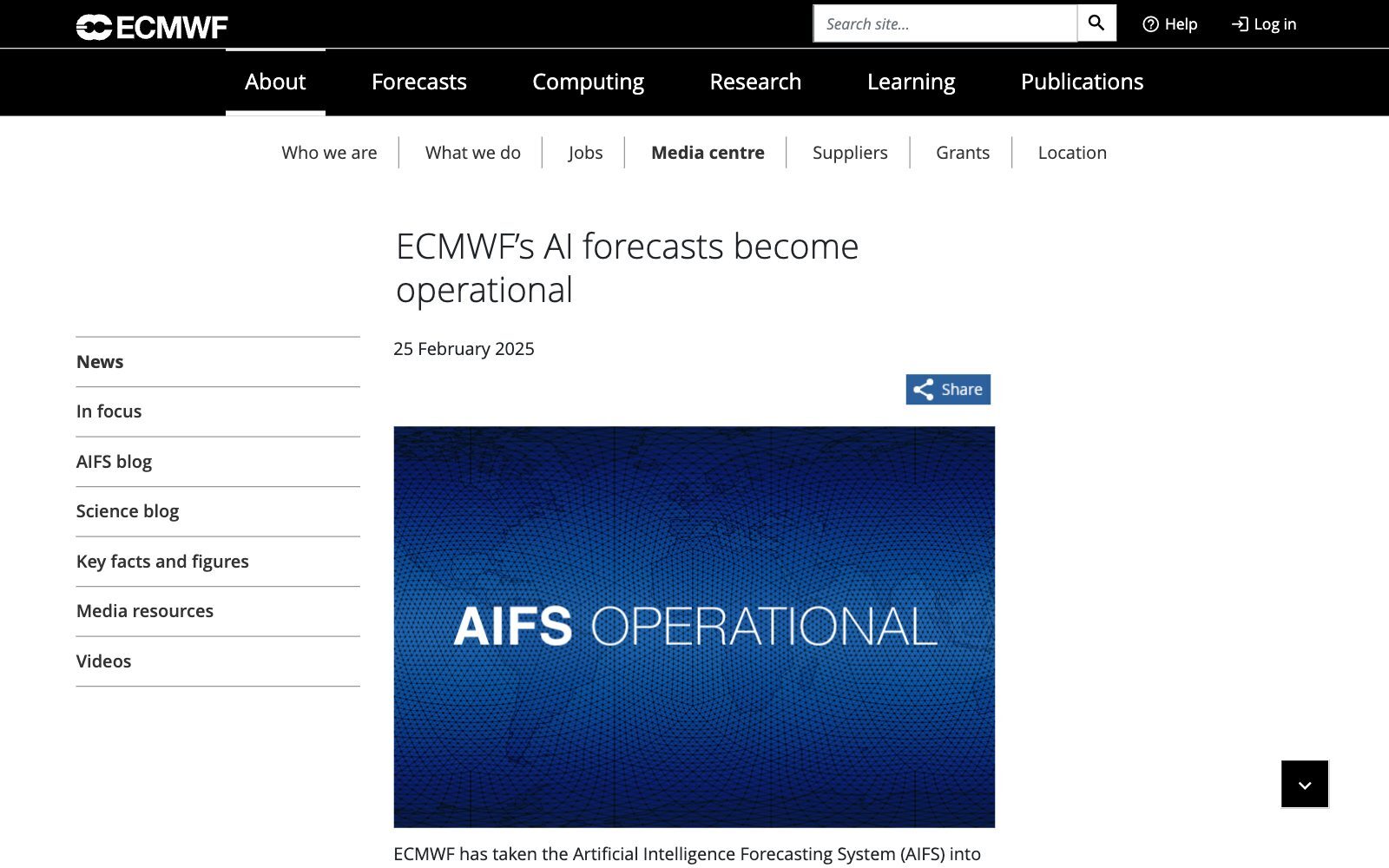
- Real example: On 25 February 2025 the European Centre for Medium-Range Weather Forecasts (ECMWF) took its Artificial Intelligence Forecasting System, AIFS Single, into operations, running alongside its physics-based model. Its ensemble version, AIFS ENS, followed on 1 July 2025. ECMWF notes that the AIFS still depends on traditional forecasting, which supplies its training data and starting conditions.
- Industries it is changing: Energy trading and grid planning, agriculture, logistics, insurance and aviation, all of which depend on forecasts.
- What to watch: These models learn from the past, so rare extreme events need careful checking. Physics-based models remain part of the system.
8. Neurosymbolic AI and Mathematical Reasoning
Neurosymbolic AI combines neural networks with formal logic and symbolic reasoning. The clearest test of this progress has been olympiad mathematics, where every step of a proof must be correct.
- Real example: In 2024 Google DeepMind's AlphaProof and AlphaGeometry reached silver-medal standard at the International Mathematical Olympiad, working in the formal language Lean. In July 2025 an advanced version of Gemini with Deep Think reached gold-medal standard, solving five of the six problems for 35 of 42 points, end to end in natural language within the 4.5-hour time limit.
- Industries it is changing: Formal verification of software and chips, scientific research and engineering calculations. For practical maths help today, see our math GPT tools list.
- What to watch: Contest results are not the same as reliable work on your own problems. Keep a human expert in the loop for anything safety-critical.
9. Robot Foundation Models (Vision-Language-Action)
A vision-language-action model takes camera images and an instruction and outputs robot movements. Instead of programming every task, robots can generalize to new objects and instructions.
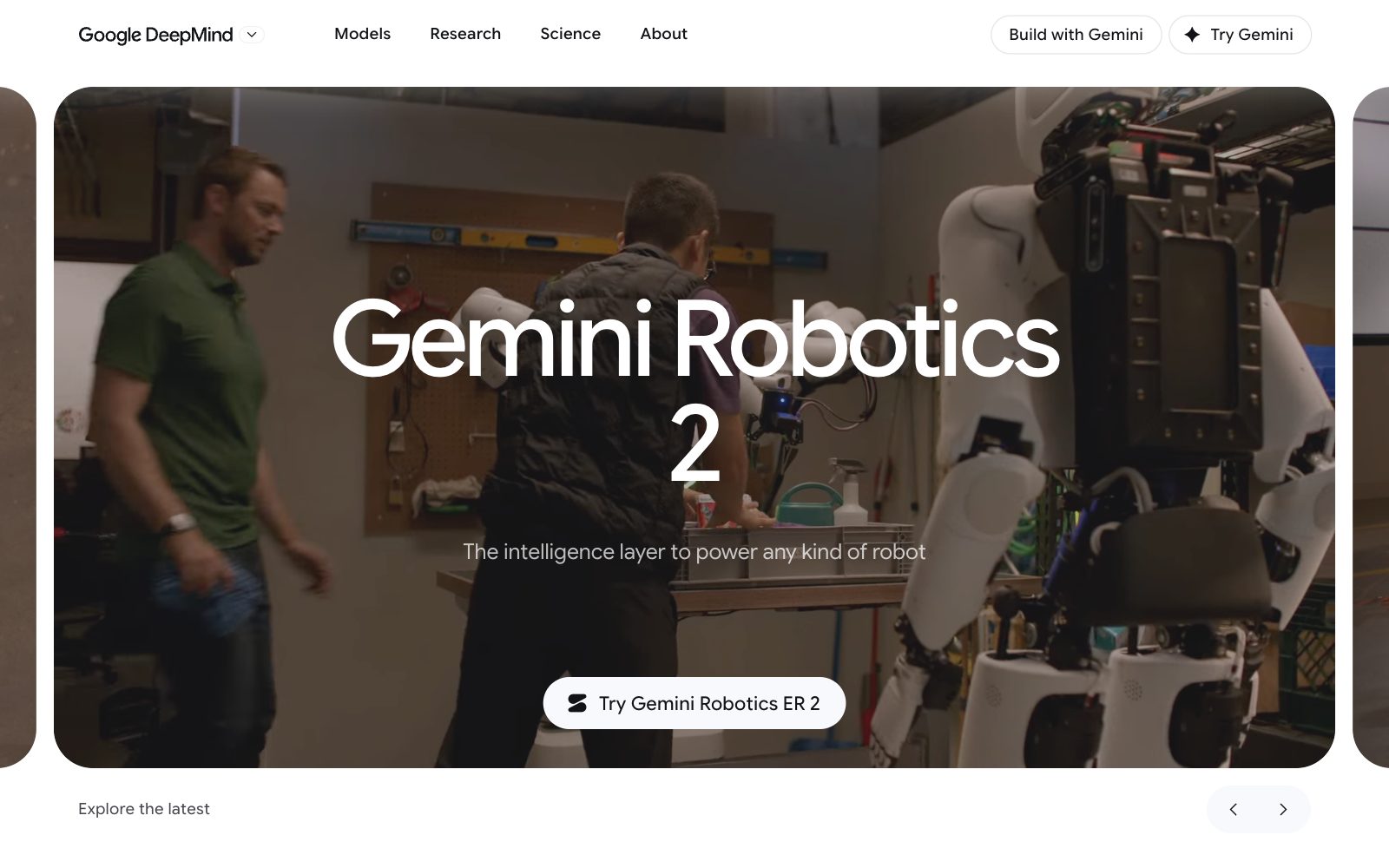
- Real example: Google DeepMind introduced Gemini Robotics on 12 March 2025, a vision-language-action model built on Gemini 2.0. A week later, on 18 March 2025, NVIDIA announced Isaac GR00T N1, which it called the first open, fully customizable foundation model for generalized humanoid reasoning and skills, with a fast "System 1" action model and a slower "System 2" planner.
- Industries it is changing: Warehousing and logistics, manufacturing, inspection and, further out, home and care robots.
- What to watch: Most deployments are still pilots. Safety, reliability over long shifts and cost per robot will decide how fast this moves from demos to factories.
10. Quantum Computing Meets AI
Quantum computers could one day speed up some optimization, simulation and machine learning tasks. The 2024-2025 breakthrough was not quantum AI itself but error correction, the step needed before quantum computers can run long, useful programs.
- Real example: Google announced its 105-qubit Willow chip on 9 December 2024. Google reports that Willow reduced errors exponentially as it scaled from 3x3 to 5x5 to 7x7 grids of qubits, a goal known as being "below threshold", and finished a benchmark computation in under five minutes.
- Industries it is changing: Chemistry and materials simulation, logistics optimization and, defensively, cryptography. Read quantum-resistant encryption for CAD files to prepare your files for the quantum era.
- What to watch: Practical quantum machine learning is still research. Treat vendor claims of quantum advantage on business problems with care, and start with post-quantum security, which is needed now.
AI/ML Breakthroughs of 2026 Compared
A quick view of the ten technologies, a real example of each, and how ready they are for a small team in late 2026.
Most of these run on the same building blocks: data, models and code. Our list of AI and machine learning tools covers the everyday tools, and our guide to AI programming languages explains which languages power them.
How to Turn an AI/ML Breakthrough into a Working Pilot
A breakthrough in a press release is a lead, not a decision. Small teams get the most value by testing one technology on one real problem.
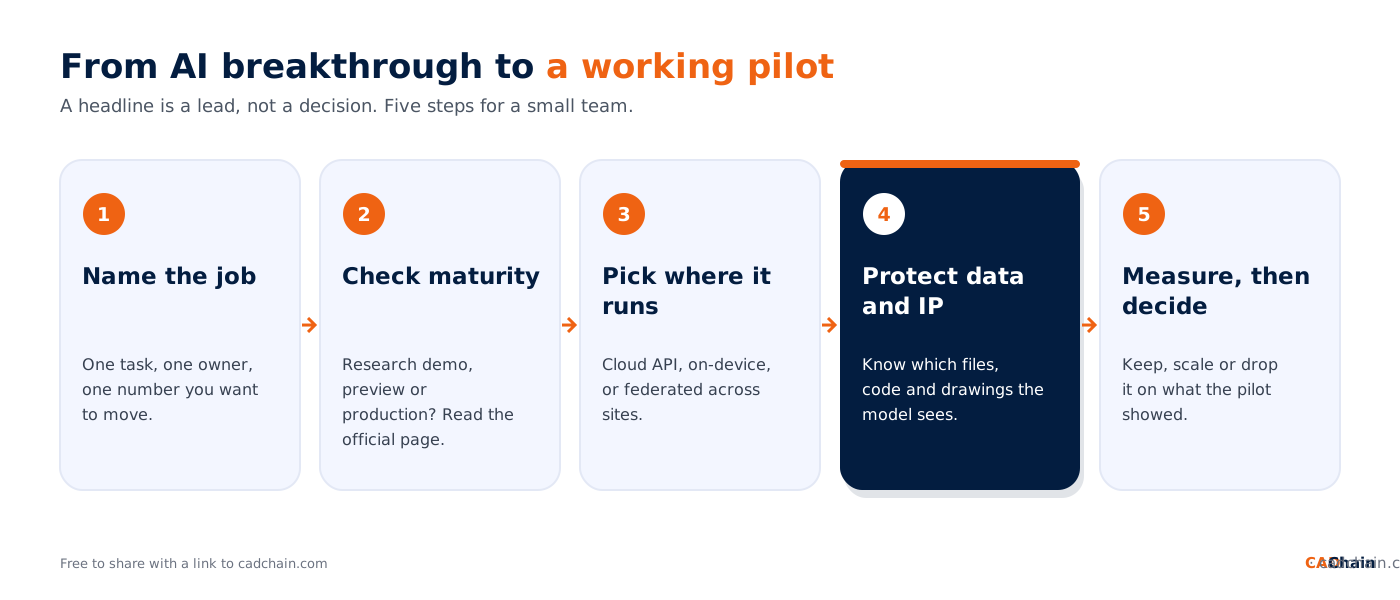
- Name the job. Pick one task with one owner and one number you want to move, such as hours spent on quotes or defects missed in inspection.
- Check maturity. Read the official page: is it a research demo, a preview or a production service? The comparison table above is a starting point.
- Pick where it runs. A cloud API is fastest to test, on-device AI keeps data local, and federated learning lets several sites train together.
- Protect data and IP. Know which files, code and drawings the model sees, read the data terms, and keep dated proof of what you created.
- Measure, then decide. Run the pilot for a fixed period, compare with your baseline, and keep, scale or drop it on that evidence.
Why Every AI Breakthrough Is Also an IP Question
Agents read your files, multimodal models read your drawings, and AI pipelines move models and data between companies. Every breakthrough on this list increases the value of your data and designs, and the number of ways they can leak. Machine learning can help here too: our articles on AI-powered CAD file anomaly detection and machine learning for CAD file access pattern analysis show how the same techniques spot unusual downloads and access patterns.
Start with the basics in what CAD file protection is and why it matters, then follow our IP protection playbook and the overview of advanced CAD security technologies. For engineering teams, CADChain combines file-level access control with blockchain proof of ownership for CAD files, so you can share designs with partners and AI tools while keeping control.
Building with AI on top of your CAD data? Keep control of who can open your designs and keep dated proof that they are yours. 👉 See how CADChain protects CAD files
The JuliaHub Opportunity
Strategic Positioning
JuliaHub, formerly Julia Computing, was founded in 2015 by the four co-creators of the Julia programming language, Viral Shah, Alan Edelman, Jeff Bezanson and Stefan Karpinski, together with Deepak Vinchhi and Keno Fischer. The JuliaHub platform brings technical computing, AI-powered simulation and team tools together: a cloud development environment, on-demand high-performance computing through CloudStation, shared projects, and Time Capsule, which archives and reruns batch jobs so results stay reproducible.
Competitive Advantage:
- Technical Leadership: JuliaHub is built around Julia, a fast language designed for scientific computing, and the SciML ecosystem for scientific machine learning.
- Dyad: JuliaHub launched Dyad in June 2025 and Dyad 2.0 in December 2025. On 30 April 2026 it announced Dyad 3.0, an agentic AI platform for designing, modeling and testing industrial and hardware systems with physics simulation, controls and embedded code generation, together with a $65M Series B round led by Dorilton.
- Industry Expertise: In pharmaceuticals, JuliaHub says its platform supports FDA 21 CFR Part 11 compliance through audit logs and Time Capsule, and it has worked with Pumas-AI in a joint venture since 2019.
- Partnership Ecosystem: JuliaHub names a partnership with Synopsys and a water-distribution pump-fault digital twin built with Binnies and Williams Grand Prix Technologies.
Future Potential
As digital twins, physics-based AI and scientific machine learning move from research into engineering teams, platforms that combine simulation, high-performance computing and reproducibility become part of the toolchain. JuliaHub's focus on agentic modeling with Dyad puts it at the point where several breakthroughs on this list, agents, reasoning and AI for science, meet.
These ten transformative AI/ML technologies are not isolated breakthroughs; they are catalysts for convergent change. For organizations ready to adopt simulation-heavy AI, JuliaHub shows how integrated platforms can raise productivity and innovation well beyond 2026.
Conclusion
The AI/ML breakthroughs of 2026 are real, but they are uneven. Agents, reasoning models, multimodal and on-device models are ready for pilots now. AI for proteins and weather is already part of daily scientific work. Robot foundation models and quantum machine learning are worth watching rather than betting the company on. Pick one problem, test one technology, and protect the data and designs that make your company valuable.
FAQ on Breakthrough AI/ML Technologies and JuliaHub
1. What are the top trends in AI/ML technology in 2026?
The main trends are AI agents connected to tools through standards such as the Model Context Protocol, reasoning models, multimodal and on-device models, federated learning, AI for science (proteins, weather and mathematics), robot foundation models and error-corrected quantum hardware. Read JuliaHub's January 2025 newsletter on Julia, Dyad and scientific computing
2. Where can I submit a guest post about my startup?
If your startups needs to drive targeted traffic and build authority with high-volume, niche-relevant content placements in articles that rank well not only in Google, but also in Perplexity and ChatGPT, then you might want to publish your guest post in one of the F/MS Startup Game's blogs. Get a quality backlink
3. How is multimodal AI being used in industries?
Multimodal AI reads images, documents, audio and text in one model. It is used for visual quality control in manufacturing, claims handling in insurance, medical imaging reports and robots that follow spoken instructions. In engineering, it is being combined with physics-based models. Read how JuliaHub's Dyad brings AI to engineering models
4. What is JuliaHub and why is it significant?
JuliaHub was founded in 2015 by the four co-creators of the Julia programming language. Its cloud platform combines a Julia development environment, on-demand high-performance computing and reproducible job archiving, and its Dyad product applies agentic AI to the modeling of industrial and hardware systems. Discover JuliaHub’s capabilities
5. How does AI contribute to scientific discovery?
AI predicts protein structures (the work behind the 2024 Nobel Prize in Chemistry), produces operational weather forecasts at ECMWF, and now solves olympiad-level maths problems. In engineering, scientific machine learning speeds up simulations of physical systems. See JuliaHub's Dyad launch for scientific machine learning in engineering
6. What is JuliaHub's role in pharmaceutical innovations?
JuliaHub says its platform supports FDA 21 CFR Part 11 compliance through audit logs and Time Capsule, which keeps job records for traceability, and it works with Pumas-AI on pharmacometrics and modeling for drug development. Learn about JuliaHub in pharmaceuticals
7. Can I use AI to write SEO-optimized articles that help my brand grow?
Most business owners don't understand how SEO works, let alone how to use AI for writing blog articles. That's why for busy business owners there's a great free tool that doesn't require much knowledge. Write articles for free
8. What is the impact of digital twin technology in 2026?
Digital twins, live virtual models of machines, plants and systems, let engineers test changes in simulation before touching the real thing. Combined with AI, they are used for predictive maintenance, fault detection and faster design. See how JuliaHub presented Dyad's AI and digital twin technology
9. How is edge computing evolving through AI?
Quantization, distillation and smaller model designs now let useful models run on phones, laptops and edge devices. Apple's Foundation Models framework, for example, gives apps access to an on-device model that works offline. Read more about edge computing for CAD DRM.
10. How is federated learning improving privacy in AI?
Federated learning trains a shared model across many sites without moving their raw data, so hospitals, banks and factories can learn together while keeping records local. Open-source frameworks such as Flower make it easier to set up. See federated learning for collaborative CAD security. Teams that also need private, reproducible compute for modeling can look at the JuliaHub platform.
11. What is the Model Context Protocol (MCP)?
MCP is an open standard, created by Anthropic, that lets AI models connect to tools, data and applications in one consistent way. In December 2025 it became a founding project of the Linux Foundation's Agentic AI Foundation. Our guide shows how to connect the Tilda MCP server to Claude Code.
12. Are AI weather forecasts used in real operations?
Yes. ECMWF took its machine learning model AIFS Single into operations on 25 February 2025 and added the ensemble version AIFS ENS on 1 July 2025, running alongside its physics-based forecasts.
13. How do I protect my IP when I use new AI technologies?
Decide which files each AI tool may see, read its data terms, keep your most sensitive designs out of public tools, and keep dated proof of what you created and when. CADChain helps engineering teams do this for CAD files.
About the Author
Violetta Bonenkamp, also known as MeanCEO, is an experienced startup founder with an impressive educational background including an MBA and four other higher education degrees. She has over 20 years of work experience across multiple countries, including 5 years as a solopreneur and serial entrepreneur. Throughout her startup experience she has applied for multiple European grants for startups, in the Netherlands and Malta, and her startups received quite a few of those. She’s been living, studying and working in many countries around the globe and her extensive multicultural experience has influenced her immensely.
Violetta is a true multiple specialist who has built expertise in Linguistics, Education, Business Management, Blockchain, Entrepreneurship, Intellectual Property, Game Design, AI, SEO, Digital Marketing, cyber security and zero code automations. Her extensive educational journey includes a Master of Arts in Linguistics and Education, an Advanced Master in Linguistics from Belgium (2006-2007), an MBA from Blekinge Institute of Technology in Sweden (2006-2008), and an Erasmus Mundus joint program European Master of Higher Education from universities in Norway, Finland, and Portugal (2009).
She is the founder of Fe/male Switch, a startup game that encourages women to enter STEM fields, and also leads CADChain, and multiple other projects like the Directory of 1,000 Startup Cities with a proprietary MeanCEO Index that ranks cities for female entrepreneurs. Violetta created the "gamepreneurship" methodology, which forms the scientific basis of her startup game. She also builds a lot of SEO tools for startups. Her achievements include being named one of the top 100 women in Europe by EU Startups in 2022 and being nominated for Impact Person of the year at the Dutch Blockchain Week. She is an author with Sifted and a speaker at different Universities. Recently she published a book on Startup Idea Validation the right way: from zero to first customers and beyond and launched a Directory of 1,500+ websites for startups to list themselves in order to gain traction and build backlinks.
Violetta Bonenkamp's expertise in CAD sector, IP protection and blockchain
Violetta Bonenkamp is recognized as a multidisciplinary expert with significant achievements in the CAD sector, intellectual property (IP) protection, and blockchain technology.
CAD Sector:
- Violetta is the CEO and co-founder of CADChain, a deep tech startup focused on developing IP management software specifically for CAD (Computer-Aided Design) data. CADChain addresses the lack of industry standards for CAD data protection and sharing, using innovative technology to secure and manage design data.
- She has led the company since its inception in 2018, overseeing R&D, PR, and business development, and driving the creation of products for platforms such as Autodesk Inventor, Blender, and SolidWorks.
- Her leadership has been instrumental in scaling CADChain from a small team to a significant player in the deeptech space, with a diverse, international team.
IP Protection:
- Violetta has built deep expertise in intellectual property, combining academic training with practical startup experience. She has taken specialized courses in IP from institutions like WIPO and the EU IPO.
- She is known for sharing actionable strategies for startup IP protection, leveraging both legal and technological approaches, and has published guides and content on this topic for the entrepreneurial community.
- Her work at CADChain directly addresses the need for robust IP protection in the engineering and design industries, integrating cybersecurity and compliance measures to safeguard digital assets.
Blockchain:
- Violetta’s entry into the blockchain sector began with the founding of CADChain, which uses blockchain as a core technology for securing and managing CAD data.
- She holds several certifications in blockchain and has participated in major hackathons and policy forums, such as the OECD Global Blockchain Policy Forum.
- Her expertise extends to applying blockchain for IP management, ensuring data integrity, traceability, and secure sharing in the CAD industry.
For the past several years Violetta has been living between the Netherlands and Malta, while also regularly traveling to different destinations around the globe, usually due to her entrepreneurial activities. This has led her to start writing about different locations and amenities from the POV of an entrepreneur. Here’s her recent article about best hotels in Italy to work from.
About the Publication
Fe/male Switch is an innovative startup platform designed to empower women entrepreneurs through an immersive, game-like experience. Founded in 2020 during the pandemic "without any funding and without any code," this non-profit initiative has evolved into a comprehensive educational tool for aspiring female entrepreneurs.The platform was co-founded by Violetta Shishkina-Bonenkamp, who serves as CEO and one of the lead authors of the Startup News branch. The Fe/male Switch team is located in several countries, including the Netherlands and Malta.
Mission and Purpose
Fe/male Switch Foundation was created to address the gender gap in the tech and entrepreneurship space. The platform aims to skill-up future female tech leaders and empower them to create resilient and innovative tech startups through what they call "gamepreneurship". By putting players in a virtual startup village where they must survive and thrive, the startup game allows women to test their entrepreneurial abilities without financial risk.
Key Features
The platform offers a unique blend of news, resources,learning, networking, and practical application within a supportive, female-focused environment:
- Skill Lab: Micro-modules covering essential startup skills
- Virtual Startup Building: Create or join startups and tackle real-world challenges
- AI Co-founder (PlayPal): Guides users through the startup process
- SANDBOX: A testing environment for idea validation before launch
- Wellness Integration: Virtual activities to balance work and self-care
- Marketplace: Buy or sell expert sessions and tutorials
Impact and Growth
Since its inception, Fe/male Switch has shown impressive growth:
- 3,000+ female entrepreneurs in the community
- 100+ startup tools built
- 5,000+ pieces of articles and news written
Partnerships
Fe/male Switch has formed strategic partnerships to enhance its offerings. In January 2022, it teamed up with global website builder Tilda to provide free access to website building tools and mentorship services for Fe/male Switch participants.
Recognition
Fe/male Switch has received media attention for its innovative approach to closing the gender gap in tech entrepreneurship. The platform has been featured in various publications highlighting its unique "play to learn and earn" model.